Tag Archives: Agriculture Water Softener

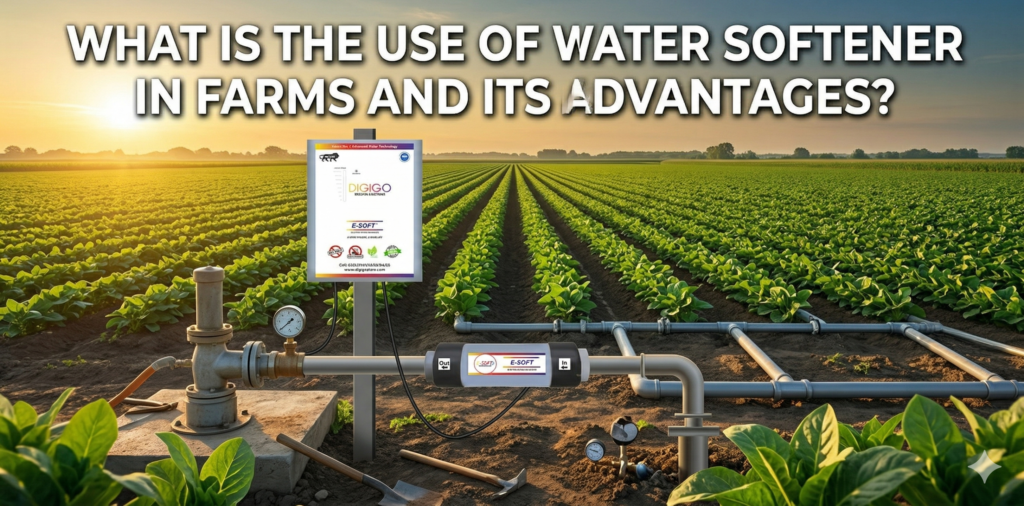
What is the Use of Water Softener in Farms and Its Advantages

Understanding Hard Water Challenges in Agriculture

A farmer from Saurashtra was explaining this while sitting with a reporter. “Paani pan aa j, bore pan aa j. Pan dheere dheere zameen badlati gai.

“Fertilizer pan vadharyo. Pan paak ma jane pela jevi vaat nathi.”

For him, nothing had changed on the surface. Same crops. Same irrigation timing. Same hard work. But the results were not same anymore.

This is a common story across many farms in the region. The challenge is not always visible like pests or weather damage. It builds slowly through the water that flows every single day.

Hard Water Problems in Farms

Hard water is common across agricultural regions in India, especially where borewell sources dominate. It carries high levels of calcium and magnesium. These minerals are not harmful in small amounts, but their behavior in farming systems creates long-term challenges.

The effects are gradual, which is why they are often ignored or misdiagnosed.

1. Soil Compaction Over Time

Hard water minerals bind with soil particles. Over repeated irrigation cycles, this reduces soil porosity. The soil becomes denser, making it harder for roots to expand and absorb nutrients.

2. Nutrient Locking

Fertilizers are applied, but crops do not respond as expected. Minerals in hard water react with nutrients, making them less available to plants. This leads to increased fertilizer usage without proportional results.

3. Drip Irrigation Blockage

Micro-irrigation systems suffer heavily:

  • Emitters clog due to scale deposits
  • Water distribution becomes uneven
  • Maintenance frequency increases

Farmers often assume it is a filtration issue, but scaling inside pipelines is a major contributor.

4. Reduced Water Penetration

Instead of soaking evenly, water tends to stay near the surface or move irregularly. This affects root hydration and overall plant health.

5. Root Damage and Rotting

When water does not penetrate properly and stays unevenly distributed, roots can either remain dry or stay overly wet in patches. This imbalance can lead to root stress and, in many cases, rotting. Once roots weaken, the entire plant struggles to sustain healthy growth.

6. Higher Risk of Crop Diseases

Poor water movement and mineral buildup create conditions where fungal and soil-borne diseases can develop more easily. Crops become more vulnerable because their natural resistance weakens when roots and nutrient uptake are affected.

7. Frequent Irrigation Requirement

Since water does not spread efficiently in compacted soil, farmers often feel the need to irrigate more frequently. This increases water usage, electricity costs, and overall effort without delivering better results.

8. Yellowing of Leaves

A common visible sign is yellow leaves even after proper fertilization. This happens because nutrients are present in the soil but are not fully available to the plant due to mineral interference.

9. Reduced Crop Yield

All these factors together impact production. Plants do not reach their full potential, leading to lower yield and inconsistent crop quality across the field.

These challenges highlight the growing role of water softener in agriculture, not as a luxury but as a system-level correction.

Benefits of Water Softener in Farms

Introducing a water softener for agriculture is less about changing the water source and more about improving how water behaves inside your farm system.

When water starts interacting better with soil, roots, and irrigation lines, the entire farming cycle becomes smoother and more predictable.

Here is how it creates a difference:

1. Improved Soil Structure

When mineral behavior is controlled, soil remains looser and more breathable. This allows:

  • Better root growth
  • Improved microbial activity
  • Balanced moisture retention

Additionally, treated water helps break down hard soil clusters, making the land softer and easier to work with over time. This also improves the soil’s ability to hold moisture for longer durations.

Healthy soil is the foundation of consistent farming.

2. Better Fertilizer Efficiency

With reduced mineral interference:

  • Nutrients remain available to plants
  • Fertilizer absorption improves
  • Input costs can be optimized over time

Another important shift is that water itself starts supporting nutrient movement. Instead of acting as just a carrier, it helps nutrients reach deeper into the root zone more effectively.

Farmers often notice that the same fertilizer starts giving better results.

3. Stronger Root Development

When water penetrates evenly and nutrients reach properly:

  • Roots grow deeper and stronger
  • Plants become more stable
  • Water stress reduces

Stronger roots also mean better resistance to changing weather conditions and improved overall plant health from the base itself.

4. Reduction in Yellowing of Crops

One visible improvement farmers notice is in leaf color:

  • Yellowing reduces over time
  • Plants appear healthier and greener
  • Growth becomes more uniform

This happens because nutrients are better absorbed instead of getting locked in the soil.

5. Lower Risk of Crop Diseases

With improved root strength and better soil conditions:

  • Plants develop higher natural resistance
  • Fungal and soil-related issues reduce
  • Dependency on chemical sprays can decrease

Healthier plants are naturally more capable of handling environmental stress.

6. Protection of Irrigation Systems

A major part of the advantages of water softener in agriculture lies in infrastructure protection:

  • Reduced scale inside pipelines
  • Cleaner drip lines from within
  • Longer life of irrigation systems
  • Lower maintenance and downtime

It also reduces the need for acid cleaning and frequent part replacement, saving both effort and operational cost.

7. Consistent Water Flow

When scaling reduces, pipelines maintain their internal diameter. This ensures:

  • Stable pressure
  • Uniform water distribution
  • Better control over irrigation cycles

Every plant gets similar water exposure, which is critical for uniform crop growth.

8. Water Saving and Efficient Usage

Improved absorption and distribution lead to:

  • Reduced water wastage
  • Less frequent irrigation cycles
  • Better use of available water resources

Over time, this contributes significantly to water conservation, especially in regions where water availability is already under pressure.

9. Reduced Chemical Dependency

With better nutrient delivery and healthier crops:

  • Use of pesticides and soil treatments can reduce
  • Less dependency on corrective inputs
  • Farming becomes more balanced and sustainable

10. Crop Health and Yield Stability

When water reaches roots effectively and nutrients remain available, crops grow more uniformly. This leads to:

  • Better quality produce
  • Reduced stress on plants
  • More predictable yields

In many cases, farmers also observe a noticeable increase in production and overall farm output.

These benefits make many farmers actively look for the best water softener for agriculture, especially in regions facing persistent hard water challenges.

How It Boosts Water Efficiency and Crop Yield

Water efficiency is not only about saving water. It is about making every drop work better.

An agriculture water softener plays a key role in this by changing how water behaves after it leaves the pipeline.

DIGIGO’s E-Soft system approaches this differently.

Instead of removing minerals, it uses electronic impulses to alter their structure and behavior:

  • Larger mineral clusters are broken into microscopic sizes
  • Calcium and magnesium remain present but less reactive
  • Scale formation reduces across systems

This subtle shift leads to practical outcomes in farming.

1. Better Soil Absorption

Water treated through behavior change penetrates soil more evenly. This improves root zone hydration and reduces surface runoff.

2. Uniform Irrigation Coverage

With fewer blockages in drip lines:

  • Every plant receives similar water quantity
  • Crop growth becomes more consistent across the field

3. Reduced Water Wastage

When water flows freely and spreads evenly, less water is required to achieve the same irrigation result.

4. Long-Term Soil Health

Repeated use of hard water can degrade soil structure. Managing mineral behavior helps maintain soil productivity over seasons.

This is where a hard water softener for agriculture becomes a strategic investment rather than a reactive fix.

What is the Use of Water Softener in Farms and Its Advantages

Concluding Thoughts

Farming decisions are often made based on visible factors like seeds, fertilizers, and weather. Water, though constant, is rarely questioned beyond availability.

But the difference between average and efficient farming often lies in small system-level improvements.

Managing how water behaves inside soil and pipelines is one such shift.

DIGIGO, as a water infrastructure solution provider, focuses on this deeper layer. With E-Soft, the approach is not about removing minerals but guiding their behavior so they do not disrupt farming systems.

For farmers dealing with scaling, soil tightening, or uneven irrigation, the answer may not be more input, but better water interaction.

FAQs

1. What is a water softener for agriculture and how does it help farms?

A water softener for agriculture improves how hard water behaves when used for irrigation. Instead of letting minerals form scale or block nutrients, it helps maintain soil structure, improves water flow, and supports better crop growth. It becomes especially useful in borewell-dependent regions.

2. Does a water softener remove essential minerals from water?

Not all systems remove minerals. Solutions like E-Soft work by altering mineral behavior using electronic signals. Calcium and magnesium remain in water but become less likely to form deposits or interfere with nutrients.

3. Can a water softener improve drip irrigation performance?

Yes. One of the key advantages of water softener in agriculture is reduced clogging in drip systems. By controlling scale formation, emitters stay cleaner, ensuring uniform water distribution across crops.

4. Is it suitable for all types of farms?

An agriculture water softener can be used across different farm types including open fields, orchards, and greenhouse setups. The selection depends on water source, usage pattern, and irrigation system design.

5. How does it impact fertilizer usage?

When mineral interference reduces, fertilizers dissolve and reach plants more effectively. This improves nutrient uptake and can help farmers optimize fertilizer application over time.

6. What makes E-Soft different from traditional systems?

E-Soft does not use salt, chemicals, or regeneration cycles. It works electronically to change mineral behavior, making it low maintenance and suitable for continuous agricultural operations.

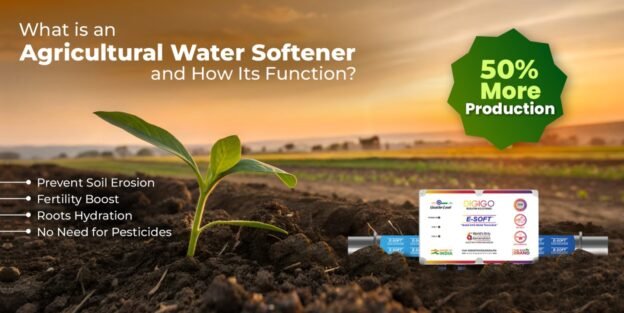
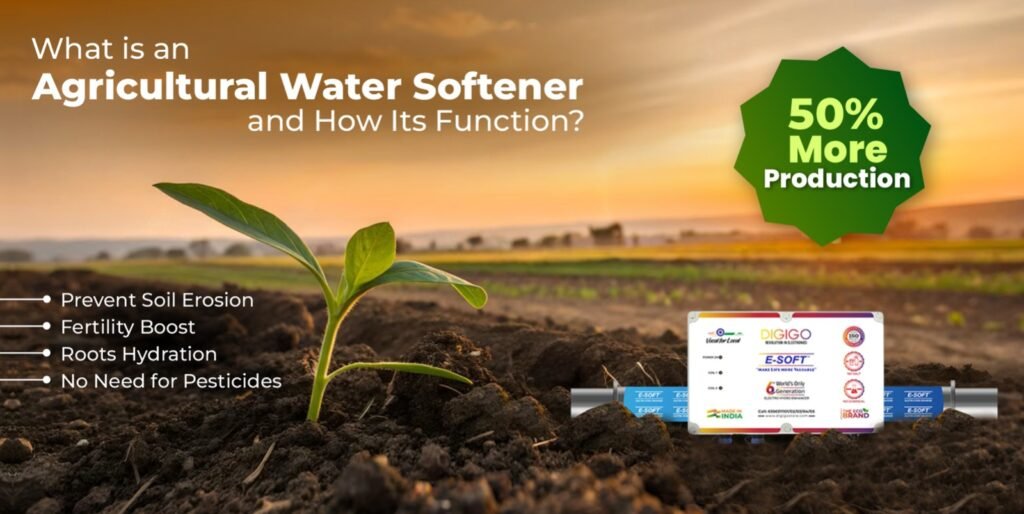
What is an Agricultural Water Softener and How Its Function

Maximize Irrigation Efficiency with Water Softeners

Around 6 AM, a farmer starts the borewell pump before the sun gets too strong. Water begins flowing through the irrigation lines across the field. At first, everything works as expected. Sprinklers rotate, drip lines release water slowly, and crops receive their share.

A few months later, something feels different.

One corner of the field looks drier than the rest. Some drip emitters release very little water. A few sprinkler heads spray unevenly. The farmer checks the pump pressure, cleans the filter, and flushes the lines. Things improve temporarily, but the issue returns after some weeks.

Many farmers face this cycle every season. The assumption is usually that the irrigation system is getting old or that soil particles are blocking the lines. But in many borewell-dependent farming areas, the real cause sits quietly inside the water itself.

Groundwater travels through layers of limestone and mineral-rich rocks before reaching borewells. By the time it reaches irrigation systems, it often carries dissolved minerals like calcium and magnesium. These minerals gradually attach to pipe walls, valves, and drip emitters, creating scale deposits.

In agriculture, this does not look like a dramatic failure. It appears slowly as uneven irrigation, frequent cleaning of drip lines, or pumps working harder than before.

Understanding this behaviour of water is important for modern farming systems. This is where a water softener for agriculture becomes part of the discussion.

What is an Agricultural Water Softener?

An agricultural water softener is a system designed to manage mineral-rich irrigation water so that it behaves more efficiently within farm infrastructure.

Hard water commonly contains high concentrations of minerals such as:

  • Calcium
  • Magnesium
  • Other dissolved mineral salts

When this water flows through irrigation pipelines and equipment, these minerals can gradually attach to internal surfaces. Over time, this leads to scaling in pipes, pumps, drip emitters, and sprinkler nozzles.

An agricultural softening system works to reduce this mineral deposition.

Traditional softeners operate using ion exchange technology. These systems remove calcium and magnesium from water and replace them with sodium. They require salt-based regeneration cycles and regular operational maintenance.

Electronic softening systems follow a different approach. Instead of removing minerals, they influence mineral behaviour.

For example, the E-Soft Agricultural Water Softener works by applying electronic impulses to the external surface of irrigation pipelines. These impulses affect the crystallization pattern of minerals in flowing water.

Rather than forming large-scale deposits that attach to surfaces, minerals tend to remain suspended in the water in smaller structures. This reduces their tendency to stick inside pipes and irrigation components.

What is an Agricultural Water Softener and How Its Function

What is the Impact of Hard Water on Agriculture?

Hard water rarely creates sudden problems on farms. The impact is usually gradual and visible through everyday irrigation challenges.

Uneven Irrigation from Drip Systems

Many farmers rely on drip irrigation to deliver water precisely to plant roots. However, the emitters in drip systems have very small openings.

Over time, minerals in hard water can accumulate inside these openings.

Farmers often observe:

  • Some plants receiving less water
  • Sections of drip lines slowing down
  • Emitters clogging repeatedly

These problems usually appear slowly across multiple irrigation cycles.

Faster Surface Drying of Soil

Another common observation in fields irrigated with mineral-heavy water is that the soil surface dries quickly.

Hard water often contains larger mineral clusters that may remain closer to the soil surface after irrigation. This can lead to faster surface evaporation compared to water that penetrates deeper into the soil.

When water remains closer to the top layer, evaporation increases, which means moisture disappears more quickly from the root zone.

In contrast, water that infiltrates deeper into the soil profile helps maintain moisture for a longer period. When water absorbs more easily into soil pores, the soil tends to stay moist for longer durations.

Because of this difference, irrigation intervals may change. In some farming situations, better soil absorption can increase the time gap between two irrigation cycles.

Increasing Chemical Dependency

Farmers sometimes respond to crop stress or lower productivity by increasing fertilizer or chemical usage.

This does not always happen directly because of hard water, but irrigation water quality can influence soil conditions and nutrient behaviour over time.

When mineral-heavy water repeatedly interacts with soil, farmers may adjust nutrient inputs to maintain crop growth.

Soil Behaviour Changes

Long-term irrigation with mineral-rich groundwater can influence soil characteristics depending on soil type and drainage conditions.

Some fields may gradually experience:

  • Reduced permeability
  • Mineral accumulation near the surface
  • Increased salinity risk in certain regions

These changes depend on multiple environmental factors, but irrigation water composition remains one of the contributing elements.

Main Role of a Water Softener for Agriculture

The role of a water softener for agriculture is not limited to treating water. Its purpose is to influence how water behaves within the irrigation system and soil environment.

Some important application of agricultural water softener systems include the following.

Managing Mineral Scaling in Irrigation Systems

Mineral scale inside the irrigation infrastructure can reduce water flow efficiency.

When mineral adhesion decreases:

  • Pipelines remain clearer
  • Sprinkler nozzles maintain their spray pattern
  • Drip emitters stay functional for longer periods

This helps irrigation systems perform closer to their intended design.

Supporting Better Soil Water Absorption

Water behaviour affects how it moves through soil layers.

When mineral particles remain smaller and suspended, water can pass more easily through soil pores. This improves soil moisture distribution around plant roots.

Better infiltration can also help reduce rapid surface evaporation in some irrigation situations.

Protecting Pumps and Equipment

Farm pumps operate under continuous load during irrigation seasons. Mineral scale can accumulate inside pump components over time.

Reducing mineral deposition helps maintain smoother internal surfaces in pipelines and pump components.

This supports more stable mechanical performance.

Reducing Irrigation Maintenance

Irrigation systems require regular monitoring and cleaning. However, mineral scaling increases maintenance frequency.

When mineral buildup is reduced, farmers may spend less time:

  • Flushing pipelines
  • Replacing drip emitters
  • Cleaning sprinkler heads
  • Servicing pumps

These practical benefits help explain how E-Soft water softeners can be beneficial in agriculture, where groundwater is the primary irrigation source.

How to Choose the Right Agricultural Water Softener?

Selecting the best agriculture water softener requires understanding both the water source and the irrigation infrastructure.

Farm decision-makers typically evaluate several operational factors.

Water Source Characteristics

Groundwater drawn from borewells often carries higher mineral loads compared to surface water sources.

Understanding water hardness levels helps determine whether mineral behaviour management is necessary.

Irrigation System Sensitivity

Different irrigation systems react differently to mineral-rich water.

For example:

  • Drip irrigation systems are highly sensitive to mineral deposits
  • Sprinkler systems can tolerate moderate scaling
  • Flood irrigation relies less on pipeline precision

Farms using drip or micro-irrigation usually prioritize scale management.

Maintenance Capacity

Some softening systems require ongoing inputs such as salt or chemical regeneration. Others operate externally on pipelines without requiring consumable materials.

Farmers often select systems that match their operational capacity and maintenance availability.

Installation Practicality

Agricultural irrigation networks cover large areas and complex pipeline layouts.

Solutions that integrate easily with existing pipelines without major structural changes are generally easier to implement.

Electronic systems are typically installed around the pipeline without cutting or modifying plumbing.

How to Use and Maintain an Agricultural Water Softener?

Agricultural softening systems are typically installed on the main irrigation pipeline, close to the pump or borewell outlet.

Once installed:

  • Irrigation water continues flowing normally
  • The system operates continuously during irrigation cycles
  • Mineral behaviour begins adjusting gradually during water flow

Maintenance requirements depend on the type of technology used.

Traditional softeners require:

  • Periodic salt refilling
  • Regeneration cycles
  • Resin maintenance

Electronic softening systems like E-Soft water softener for agriculture require no operational attention once installed.

Frequently Asked Questions (FAQs)

1. Does an agricultural water softener remove hardness completely?

Not necessarily. Some systems remove hardness minerals, while electronic systems primarily modify mineral behaviour to reduce scale formation.

2. Can these systems improve drip irrigation performance?

Managing mineral deposits can help reduce clogging risks in drip emitters and maintain more stable water flow.

3. Where are agricultural softeners usually installed?

They are typically installed on the main irrigation pipeline near the pump or borewell outlet.

4. Are these systems suitable only for large farms?

No. They are also used in smaller farms, nurseries, horticulture fields, and dairy farming operations where borewell water is used for irrigation.

A Step Towards Green Agriculture

Sustainable farming is not only about reducing chemicals or adopting modern irrigation methods. It also involves understanding how water behaves inside the farm ecosystem. In many groundwater-dependent regions, irrigation water carries minerals that slowly influence pipelines, soil moisture patterns, and irrigation efficiency.

When farmers begin managing the behaviour of these minerals, several small improvements start appearing across the system. Irrigation lines tend to remain cleaner, drip emitters maintain more consistent flow, and water can penetrate soil more effectively instead of remaining only on the surface.

Over time, these changes can support better moisture retention in the root zone. When soil stays moist for longer periods, the gap between irrigation cycles may naturally increase. This helps farms use water more thoughtfully while reducing stress on irrigation infrastructure.

Approaches that manage mineral behaviour in flowing water are gradually becoming part of modern farm water management practices. By reducing scale formation and supporting more stable water movement through irrigation systems, such technologies contribute quietly to a more efficient and resource-conscious agricultural setup.

For farms that rely heavily on borewell irrigation, improving how water interacts with both infrastructure and soil is an important step toward building a more sustainable and resilient farming environment.

Visit https://digigostore.com/ if you are looking for Hard Water Softener solution for Agriculture, Residential, Commercial or Residential. We are one of the best E-SOFT Water Softener Solution provider in India.

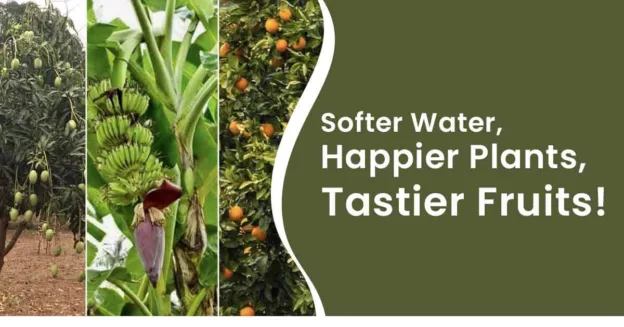
Fruit farming and fruit using Agriculture Water Softener.

Fruit Farming is not Possible in 2024…If You Don’t Have E-Soft Agriculture Water Softener!

From the mouth-watering mangoes to the flavorful bananas of the south, India boasts a rich horticultural heritage. Our nation’s fertile lands and hardworking farmers have gifted us vibrant varieties of fruits, vegetables, and ornamental crops. However, even as horticulture flourishes, many growers face challenges because of hard water.

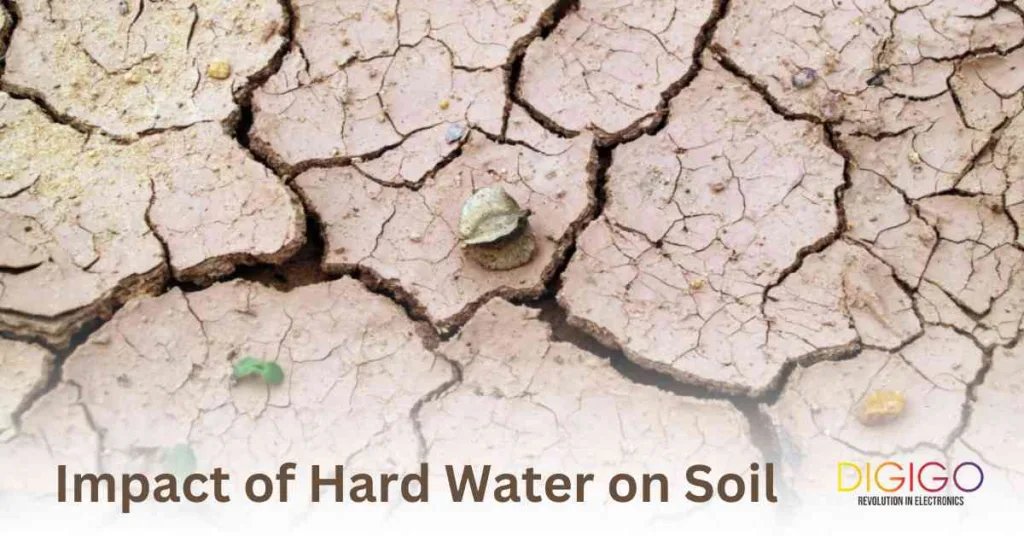
Impact of Hard Water on Soil 4

Hard water loaded with minerals like calcium and magnesium, can be an obstacle in the growth of horticulture farming. These minerals can accumulate in soil, clogging plant roots and hindering nutrient absorption. Scaling and clogging of irrigation systems are also common, leading to breakdowns and costly repairs. Moreover, hard water can reduce the effectiveness of pesticides and fertilizers, forcing farmers to use excessive amounts – a burden on their pockets and the environment.

Fortunately, there’s a simple and sustainable solution: E-Soft Agriculture Water Softener

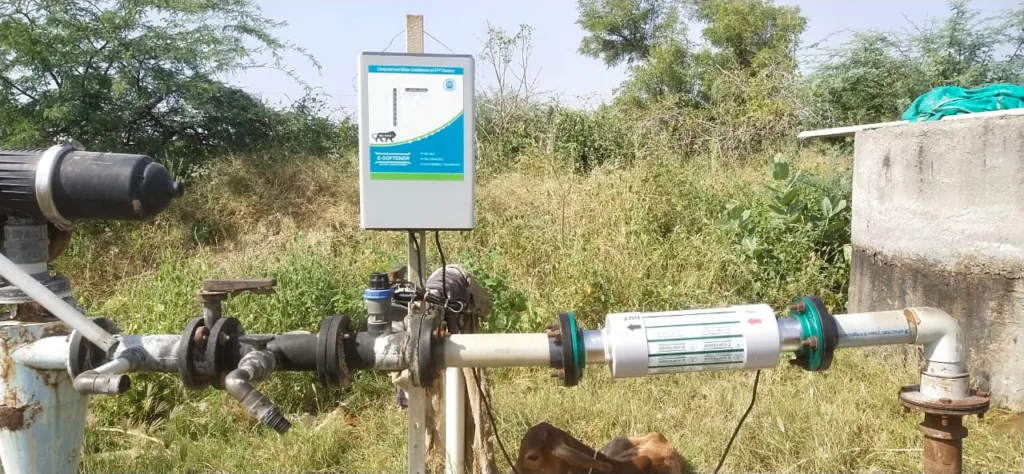
Agriculture Water Softener at Farm

E-Soft’s innovative water softening system implements the power of low-frequency electronic pulses to break down hard minerals into microscopic particles. These tiny particles are easily absorbed by plants, providing essential nutrients without the risk of soil clogging or equipment damage.

By implementing an E-Soft hard water softener for agriculture, horticultural farmers can unlock a world of benefits:

Benefits of Agriculture Water Softener in Fruit Farming (Horticulture Farming)

  1. Healthier Plants: With soft water, plants can effectively absorb nutrients, leading to stronger roots, vibrant foliage, and prosperous yields.
  2. Superior Fruit Quality: Soft water enhances the flavor, texture, and appearance of fruits, delivering a product that commands premium prices in the market.
  3. Water and Nutrient Efficiency: By eliminating mineral buildup, E-Soft’s water softening system for agriculture ensures optimal water and nutrient utilization, reducing waste and promoting sustainability.
  4. Extended Equipment Life: With no scaling or clogging, irrigation systems, pumps, and other equipment enjoy longer lifespans, minimizing costly repairs and replacements.
  5. Cost Savings: By enhancing the efficacy of fertilizers and pesticides, E-Soft’s technology can reduce input costs by up to 70%, significantly boosting profitability for farmers.
  6. Environmental Stewardship: With reduced chemical usage and water conservation, E-Soft’s solutions align with sustainable horticultural practices, promoting a greener future.

Fruitful benefits of E-Soft’s water softening technology extend far beyond. By embracing this innovative solution, horticultural farmers can unlock a world of opportunities – from increased yields and superior product quality to substantial cost savings and environmental responsibility.

At Digigo, we understand the challenges faced by India’s hardworking farming community, and we’re committed to providing world’s only 5th generation water softener systems that cater to their needs. Our water softeners for agriculture are tailored to the unique requirements of horticultural operations, ensuring optimal performance and maximum returns on investment.

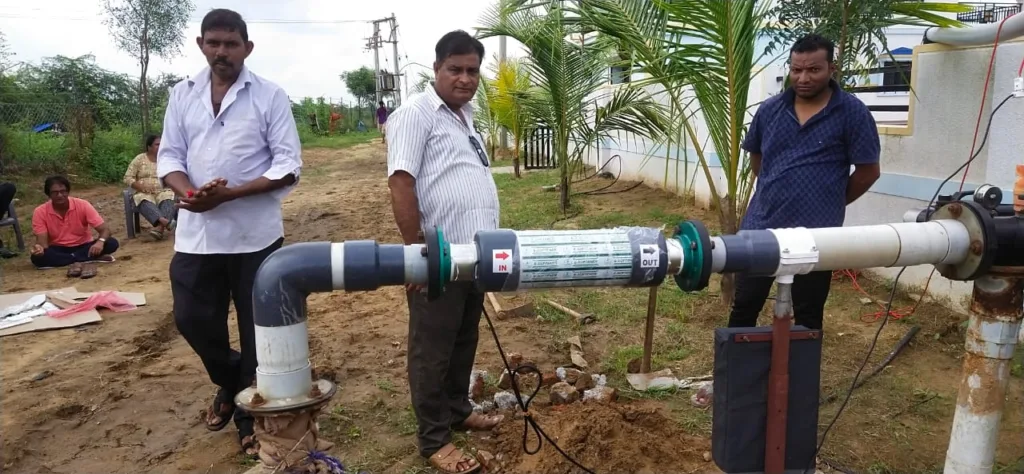
Installation of Digigo Esoft Agriculture Water Softener at Sidhhapur Farm.

As India’s number one agriculture water softener provider, we take pride in our customer-centric approach, offering reliable support and expert guidance every step of the way. Join the growing community of satisfied farmers who have reaped the rewards of our hard water softeners and water softening systems.

To our fellow horticultural farmers, we offer a heartfelt invitation: get the power of E-Soft Agriculture Water Softener and unlock a future of bountiful harvests, enhanced sustainability, and financial prosperity. Together, we can nurture a fruitful tomorrow for India’s agricultural legacy.

Testimonial Of DIGIGO E-Soft Agriculture Water Softener at Fruit Farm

E-soft Agriculture Water Softener Testimonial at Fruit Farm