Category Archives: Industrial Water Softener

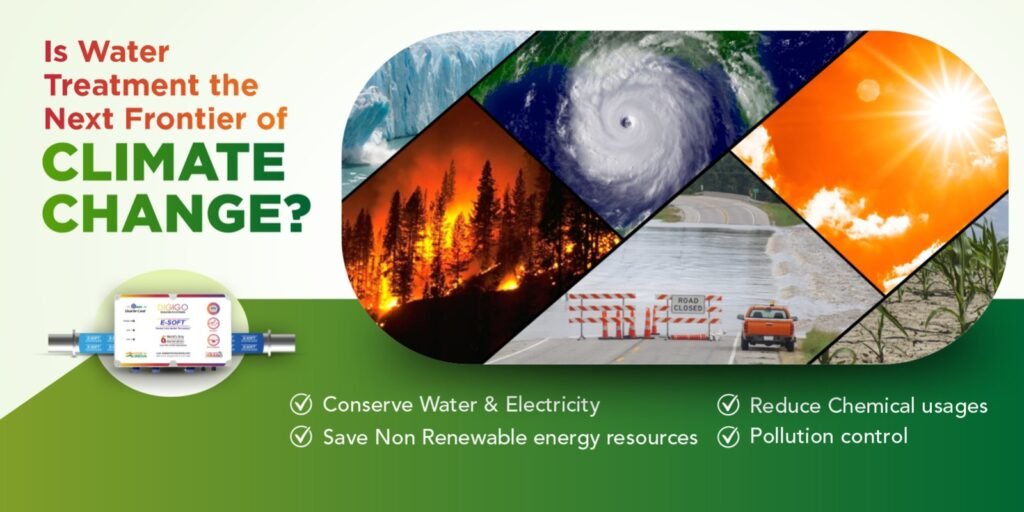
Is Water Treatment the Next Frontier of Climate Change

Is Water Treatment the Next Frontier of Climate Change?

Just two days ago, a major incident in Kanpur made headlines.

Two large treatment plants were forced to shut down, not because of a technical failure, but because they couldn’t keep up with electricity costs. Within hours, lakhs of litres of untreated sewage began flowing directly into the river.

It wasn’t just a pollution story. It was a system failure.

A reminder that water treatment today is not just about filtration or compliance, it’s deeply tied to energy, cost, and infrastructure resilience.

And this isn’t an isolated case. Across India, industrial zones are seeing water demand surge with expansion. As consumption rises, so does the energy required to pump, heat, treat, and circulate that water.

What we often overlook is this:

Water systems don’t just consume water; they consume energy, money, and stability.

And when inefficiencies build up inside them, the cost is not always visible, but it is always paid.

Which brings us to a critical question: What if water treatment is not just an operational necessity anymore but the next frontier of climate action?

The Intersection of Water, Energy, and Carbon

Every industrial process that uses water is also using energy. But the real impact begins when water quality interferes with system performance.

Hard water, rich in calcium and magnesium, quietly alters how systems behave. As it flows through pipelines, boilers, and cooling systems, it begins forming scale deposits on internal surfaces.

At first, this buildup is invisible.

Then gradually, systems start compensating.

  • Heat exchangers take longer to transfer heat
  • Boilers consume more fuel to maintain output
  • Pumps work harder to push water through narrowed pathways
  • Maintenance cycles become more frequent

What looks like a minor mineral issue becomes an energy problem. And energy problems eventually become carbon problems.

Even a thin layer of scale can significantly reduce thermal efficiency. Over time, this leads to increased emissions, not because production increased, but because systems became inefficient.

This is where the role of an Industrial Water Softener becomes more strategic than operational.

It’s no longer just about preventing deposits. It’s about protecting energy efficiency at its core.

Is Water Treatment the Next Frontier of Climate Change

Sustainable Technologies: The Tools of Change

For decades, industries have relied on conventional softening methods, primarily salt-based ion exchange systems.

While effective in reducing hardness, they come with hidden costs:

  • High water consumption during regeneration cycles
  • Continuous dependence on salt and chemicals
  • Wastewater discharge that requires further handling
  • Operational interruptions for maintenance

In a world moving toward sustainability, these trade-offs are becoming harder to justify.

This has led to a new category of solutions, ones that focus not on removing minerals, but on changing how they behave inside systems.

Electronic water softening treatment is one such approach.

Instead of extracting calcium and magnesium, it uses controlled electronic signals to alter their structure. Large mineral clusters are broken down into much finer particles, reducing their tendency to stick to surfaces.

This means:

  • Minerals stay in water but remain inactive
  • Scale formation is significantly reduced
  • Existing deposits may gradually weaken over time

What makes this approach relevant to climate action is its simplicity.

No chemicals.
No salt.
No water wastage.

Just a shift in how water interacts within the system. Modern water softener system for industries are increasingly being evaluated through this lens, not just performance, but also environmental impact.

And this is where technologies like E-Soft begin to fit naturally into the conversation.

Why the Shift is Happening Now

This transition toward smarter water treatment isn’t accidental. It’s being driven by multiple real-world pressures.

1. Energy is Becoming Unpredictable

As seen in the Kanpur incident, energy costs can directly disrupt water systems.

Industries are realizing that reducing energy dependency is not optional; it’s essential for stability.

2. Sustainability is Now Measurable

ESG frameworks are pushing industries to quantify their environmental impact.

Water systems, once ignored, are now being evaluated for:

  • Energy efficiency
  • Waste generation
  • Chemical usage

This is changing how decisions are made.

3. Water Scarcity is Reshaping Priorities

In many industrial regions, water availability is no longer guaranteed.

Systems that waste water during treatment cycles are becoming less viable. Efficiency is no longer just about cost; it’s about continuity.

4. Hidden Costs are Becoming Visible

Earlier, scaling, maintenance, and energy losses were treated as separate issues. Now, industries are connecting the dots.

They are beginning to see how water quality impacts:

  • Equipment lifespan
  • Downtime frequency
  • Overall operational efficiency

This shift in understanding is why conversations around how E-Soft Water Softener works in industries are gaining relevance not just as a technical explanation, but as a strategic approach to system optimization.

From Water Treatment to Water Behavior

What’s changing today is not just technology but mindset. Traditional systems focused on removal.

Remove hardness. Remove impurities. Remove risk. But removal always comes at a cost of chemicals, water, or energy.

The new approach is different.

It asks:

  • Can we keep minerals but make them harmless?
  • Can we reduce intervention instead of increasing it?
  • Can systems become self-efficient instead of dependent?

This is where behavior-based treatment stands out.

By influencing how minerals act rather than eliminating them, it reduces the need for continuous external inputs.

Solutions like E-Soft follow this philosophy. They work silently within existing infrastructure, improving performance without adding complexity.

And in doing so, they align more closely with the principles of sustainability.

Where DIGIGO E-Soft Fits in Industries

As industries rethink water systems from a sustainability lens, companies focusing on system-level efficiency are becoming more relevant.

DIGIGO operates in this space, looking at water not just as a resource, but as a behavior within infrastructure.

Their E-Soft solution reflects this shift.

Instead of altering water composition, it works on mineral dynamics, reducing scale formation and improving system efficiency without chemicals or regeneration cycles.

In practical terms, the benefits of E-Soft Industrial Water Softener extend across multiple layers:

  • Lower energy consumption due to better heat transfer
  • Reduced maintenance and downtime
  • No water wastage from regeneration
  • Minimal environmental discharge

All without disrupting existing operations. It’s a subtle intervention, but one that creates measurable impact over time.

Final Perspective

Climate action is often associated with large-scale transformation. But in reality, some of the most powerful changes happen within systems we rarely see.

Water treatment is one of them. It sits quietly at the intersection of energy, infrastructure, and sustainability.

And as industries search for practical ways to reduce their environmental footprint, it’s becoming clear that optimizing water systems is not just a technical upgrade; it’s a strategic move.

The future of climate action may not only depend on how we generate energy. But also on how efficiently we use it.

And in that equation, water might just be the most underestimated variable.

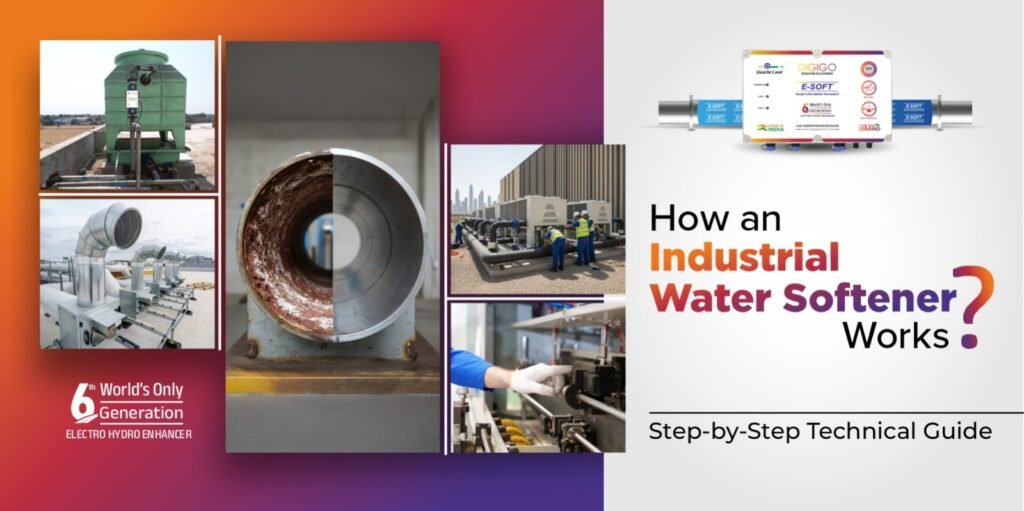
How an Industrial Water Softener Works Step-by-Step Technical Guide

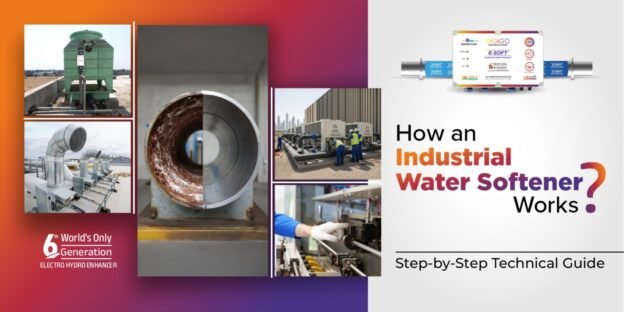
How an Industrial Water Softener Works: Step-by-Step Technical Guide

On a summer afternoon, a plant head in Gujarat noticed something odd. Water consumption had gone up, even though production hadn’t.

No leaks.
No expansion in capacity.
No visible fault.

Still, the cooling tower demanded more makeup water. The boiler took longer to reach temperature. The maintenance team blamed the weather first. Then the equipment.

Weeks later, during a routine inspection, a section of pipe was opened. What they saw was not damage. It was a buildup. A thick, stubborn layer silently narrowing the system from within.

This is the part most industries don’t see. Water enters clean. Systems are designed perfectly. But over time, something changes inside. This guide is about that change. And how different water softening systems respond to it.

The Core Problem: What is Hard Water?

Hard water contains dissolved minerals, mainly calcium and magnesium. These minerals are natural, especially in groundwater sources widely used across industrial regions.

The challenge begins when water is continuously circulated through systems.

Here is how it unfolds in real operations:

●      Layer formation inside pipes

Minerals settle gradually on pipe walls. Flow paths shrink, and pressure distribution becomes uneven.

●      Reduced efficiency in heat-based systems

Boilers and chillers depend on direct heat exchange. Scale acts as a barrier, forcing systems to consume more energy.

●      Increased wear on mechanical components

Pumps and valves work harder to maintain flow. This leads to faster degradation.

●      Higher reliance on chemical correction

Many facilities introduce chemicals to manage deposits, which adds cost and operational effort.

Hard water does not interrupt production immediately. It slowly reshapes system behavior. That is why industries turn to solutions like an Industrial Water Softener to maintain consistency.

How an Industrial Water Softener Works Step-by-Step Technical Guide

A Technical Comparison between Competitor & DIGIGO E-SOFT

Understanding how a softener works requires looking at how different technologies approach the same problem.

Conventional Systems: Step-by-Step Process

Most traditional systems use ion exchange technology.

Here is the working process:

  1. Water enters a resin-filled tank: The resin is preloaded with sodium ions.
  2. Mineral exchange takes place: Calcium and magnesium attach to the resin. Sodium replaces them in the water.
  3. Softened water flows out: Hardness is reduced as minerals are removed.
  4. Regeneration cycle begins: Once the resin is saturated, a salt solution is used to recharge it.
  5. Waste discharge occurs: The process releases mineral-rich wastewater.

This method is effective in reducing hardness levels. But it introduces ongoing dependencies:

  • Regular salt consumption
  • Scheduled regeneration downtime
  • Additional water usage
  • Chemical handling

DIGIGO E-Soft: Step-by-Step Working

DIGIGO approaches water softening as an infrastructure challenge rather than a chemical one.

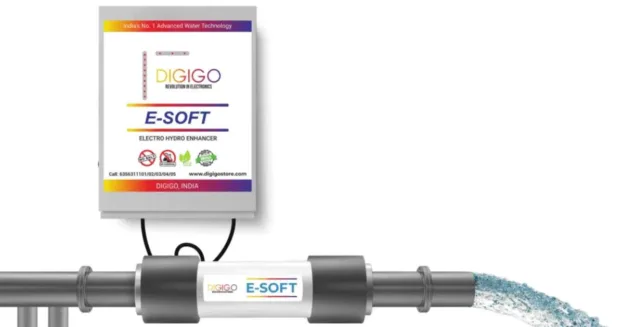
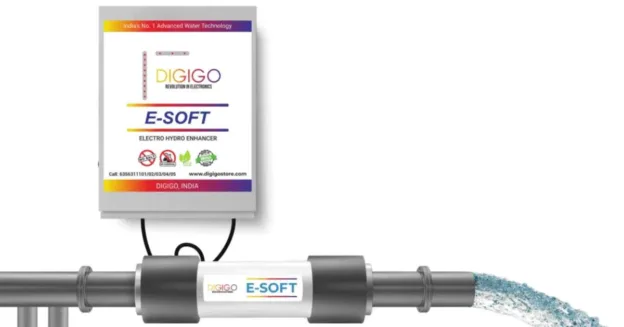
Here is How E-Soft Water Softener works in industries:

  1. Non-intrusive installation: A signal cable is wrapped externally around the pipeline. No cutting or redesign is needed.
  2. Digital signal generation: The system produces programmed low-frequency electronic impulses.
  3. Interaction with flowing water: These signals pass through the pipe and influence the water moving inside.
  4. Mineral size reduction: Larger mineral clusters are broken down into particles around 0.5 microns.
  5. Behavioral change in minerals: Calcium and magnesium remain present but become less likely to stick to surfaces.
  6. Controlled scaling inside systems: New deposits reduce significantly, and existing buildup becomes easier to manage over time.

This is the working principle of the E-Soft Industrial Water Softener.

There are no consumables involved.
There is no regeneration cycle.
There is no change in mineral content.

The system works continuously as water flows through it.

Operational Perspective

When applied in real industrial environments, the difference becomes practical:

  • Conventional systems focus on pre-treatment
  • E-Soft works within the system flow itself
  • Traditional setups need monitoring and replenishment
  • E-Soft runs with minimal operational involvement
  • Chemical-based systems create discharge
  • E-Soft keeps the process clean from additives

This shift changes how industries manage water over the long term.

What are the Considerations of Water Softeners for Industrial Use?

Choosing the right Water Softener System for Industries requires looking beyond specifications. It is about fit, function, and long-term impact.

1. Type of Application

Different industries interact with water differently.

  • Food processing focuses on consistency
  • Textile units depend on uniform reaction
  • Heavy industries rely on thermal efficiency

The solution must align with the process.

2. Ease of Integration

Industrial environments are already complex.

  • Does installation require shutdown?
  • Will it disturb existing layouts?

E-Soft integrates externally, which reduces disruption during setup.

3. Operational Stability

Continuous operations demand reliable performance.

  • Can the system handle fluctuating loads?
  • Will efficiency remain stable over time?

Consistency matters more than peak performance.

4. Maintenance Effort

Maintenance often becomes a recurring burden.

  • Salt-based systems need regular input
  • Chemical methods require supervision

One of the key Benefits of E-Soft Industrial Water Softener is the reduction in such routine tasks.

5. Cost Over Time

Initial pricing does not reflect long-term value.

Consider:

  • Energy usage due to scaling
  • Maintenance frequency
  • Equipment lifespan

A system that supports efficiency helps control indirect costs.

6. Environmental Impact

Industrial water use is closely linked to sustainability.

  • Chemical discharge affects treatment plants
  • Water wastage increases resource pressure

A system that operates without additives simplifies compliance and reduces environmental load.

Closing Take

Water does not change its nature overnight. But its effect on systems becomes visible over time.

Industrial operations depend on flow, heat transfer, and consistency. When mineral behavior interferes with these, performance begins to shift.

A traditional Industrial Water Softener focuses on removing minerals. DIGIGO focuses on managing how those minerals behave inside systems.

This difference changes how industries experience water over months and years. Instead of reacting to scale after it forms, the approach becomes about preventing resistance before it builds.

That is where infrastructure thinking starts making sense.

FAQ’s

1. What is the basic working principle of an industrial water softener?

Most systems either remove hardness minerals or control their behavior to reduce scaling inside equipment.

2. Does E-Soft remove minerals from water?

No. It changes the behavior of minerals so they do not form hard deposits.

3. Where is E-Soft typically installed?

It is installed externally on pipelines, making it suitable for boilers, cooling towers, and process lines.

4. Does it require regular maintenance?

It operates electronically and does not require salt or chemical refilling.

5. Which industries can use it?

Manufacturing, food processing, pharmaceuticals, and other water-intensive sectors can benefit from it.

If systems start asking for more without a clear reason, it is worth looking beyond machines. Sometimes, the real change is happening inside the water itself.

Digigo Esoft Water Softener

India’s Hard Water Problem: One Solution for Every Industry

Hey there, Indian business owners and factory managers! If you’re reading this, chances are you’ve faced the headache of hard water in your businesses. Whether you run a textile unit, a food processing plant, or a steel factory, hard water is a silent troublemaker that messes with your machines, pipes, and profits. Today, let’s talk about India’s hard water problem and how one simple solution hard water softeners can work wonders for every industry. It’s practical, it’s affordable, and it’s something every Indian business needs to know about!

What’s the Hard Water Problem in India?

If you’ve ever seen white, chalky buildup on your taps or machines, that’s hard water at work. Hard water has too much calcium and magnesium—minerals that come from the ground, especially in places like Rajasthan, Gujarat, and Punjab. In India, over 70% of our water is hard because of our soil and rocks. Borewells, rivers, and even municipal supplies often carry these minerals, and they’re a big problem for industries.

Why? Because hard water clogs pipes, damages equipment, and slows down production. Imagine your boiler breaking down or your cooling system failing—all because of that stubborn scale buildup. It’s not just a small issue; it’s costing Indian industries crores every year in repairs and delays.

How Hard Water Hurts Different Industries

Let’s break it down so it’s easy to see how hard water affects your work:

  • Textile Industry: Hard water leaves stains on fabrics and messes up dyeing. Your clothes don’t look as bright, and customers notice.
  • Food Processing: Scaling in boilers and pipes affects taste and safety. Plus, it’s tough to clean equipment properly.
  • Steel and Manufacturing: Machines overheat or fail when hard water blocks cooling systems. That means more downtime and less output.
  • Hotels and Restaurants: Guests complain about spotty glasses or dull laundry. Hard water even makes cooking harder.
  • Pharma Industry: Water quality is everything here. Hard water can ruin medicines and fail strict standards.

No matter your industry, hard water is like an uninvited guest that keeps causing trouble. But don’t worry—there’s a fix!

One Solution Fits All: Hard Water Softeners

Here’s the good news: Industrial water softeners can solve this problem for every industry in India. A water softener takes out those pesky minerals and gives you soft water that’s safe for your machines, products, and people. It’s like giving your business a shield against hard water damage.

How does it work? Simple! A water softener uses a process (like ion exchange) to swap calcium and magnesium with sodium. The result? Clean, soft water that doesn’t leave scale or harm your equipment. There are different types—some use salt, some don’t—but they all do one thing: make hard water harmless.

Why Every Indian Industry Needs a Hard Water Softener

Still not sure? Here’s why water softeners are a game-changer:

  1. Save Money: Less scaling means fewer repairs and lower energy bills. Soft water helps machines run smoothly.
  2. Better Products: From tastier food to brighter clothes, soft water improves quality.
  3. Longer Machine Life: No more replacing boilers or pipes every few years.
  4. Happy Customers: Whether it’s spotless dishes or perfect medicines, your clients will notice the difference.
  5. Eco-Friendly: Soft water means less detergent and energy use—good for your wallet and the planet.

In India, where water quality changes from state to state, a water softener is like a magic wand. It works whether busy factories or textile hubs.

DIGIGO Industrial Hard Water Softener, Made for India, Made for You

DIGIGO Industrial hard water softeners are designed with India in mind. They handle borewell water, monsoon changes, and high mineral levels. You can get small units for a restaurant or big systems for a factory. And they’re easy to install—no need to stop your work for days.

Time to Act: Beat India’s Hard Water Problem

Hard water isn’t going away on its own. With India’s industries growing fast, we can’t let it slow us down. A water softener isn’t just a tool—it’s an investment in your business’s future. Think about it: less stress, more savings, and happier customers.

Digigo Esoft Water Softener

હાર્ડ વોટર સોફ્ટનર્સ: પાણી ટેક્નોલોજીનું ક્રાંતિકારી ભવિષ્ય | હાર્ડ વોટર સમસ્યાનું સમાધાન

કેમ છો બધા? ક્યારેય વિચાર્યું છે કે અમુક જગ્યાઓએ કપડાં ધોવાં કેમ ખૂબ જ મુશ્કેલ લાગે છે? કોમલ કાકી ને યાદ કરો, તેઓ દરેક રવિવારે તેમના વોશિંગ મશીન માટે ફરિયાદ કરતાં, “સાંભળો છો! આ વોશિંગ મશીન ફરીથી બગડી ગયું! કોણ જાણે કયું સસ્તું ઉપાડી લાવ્યા છો?” 

કે પછી દશરથ મામા, જેમની ખેતીમાં ખારાશના કારણે પાકનું વળતર મળતું નથી. જમીન પર પડેલા મીઠાના ડાઘો ને પાંદડાના પીળાશથી ખેતર તૂટી ગયું હોય એવું લાગતું.

આ તો માત્ર ઘર અને ખેતરના કિસ્સા છે. ઉદ્યોગોમાં તો મોટી મશીનો પર આ જ હાર્ડ વોટર સ્કેલના કારણે ઠેર ઠેર મૂંઝવણ ઊભી થાય છે. અને તેમના નુકશાનની ગણતરી તો લાખોમાં પડે છે. 

અહીં વોશિંગ મશીન, જમીન કે મશીનરીનો કોઈ વાંક નથી; આ સમસ્યાનું કારણ છે ક્ષારયુક્ત પાણી એટલે કે હાર્ડ વોટર. 

પણ હવે ધ્યાન આપો! વોટર સોફ્ટનર જેવી નવીન ટેક્નોલોજી આ દરેક સમસ્યાનો અસરકારક ઉકેલ છે. હા, હવે પાણીના આ પથ્થરીય ખનિજોને નિષ્ક્રિય બનાવી શકાય છે અને તે પણ અદ્યતન અને પર્યાવરણમિત્ર રીતથી.

ચાલો, સાથે મળીને સમજીએ કે શા માટે હાર્ડ વોટર સોફ્ટનર માત્ર એક વિકલ્પ નથી, પણ આજના યુગની જરૂરિયાત બની ગયું છે, અને કેવી રીતે આ ટેકનોલોજી આપણા જીવનને વધુ સરળ અને ટકાઉ બનાવે છે.

હાર્ડ વોટર શું છે, અને શા માટે તેની ચિંતા કરવી જોઈએ?

હાર્ડ વોટરમાં કેલ્શિયમ અને મૅગ્નેશિયમ જેવા ખનિજો સક્રિય તેમજ વધુ પ્રમાણમાં હોય છે. આ ખનિજો પ્રાકૃતિક છે, પરંતુ તેનો સ્વાસ્થ્ય, ઉપકરણો, જમીન અને પર્યાવરણ પર થતી અસર સુરક્ષિત નથી.

સ્વાસ્થ્ય પર અસર:

હાર્ડ વોટરનો ઉપયોગ શુષ્ક ત્વચા, નાજુક વાળ અને લાંબા ગાળાના સ્વાસ્થ્ય સંબંધિત પ્રશ્નો ઊભા કરી શકે છે, ખાસ કરીને જો તે કોઈ ટ્રીટમેન્ટ વિના પીવામાં આવે.

ઉપકરણોને નુકસાન:

વોશિંગ મશીન, ડિશવોશર અને વોટર હીટર જેવા ઉપકરણોમાં સ્કેલ બનવાથી તેનો જીવનકાળ નોંધપાત્ર રીતે ઓછો થાય છે.

પર્યાવરણ પર અસર:

હાર્ડ વોટરનો ઉપયોગ કરતી ઔદ્યોગિક મશીનોને વધુ ઊર્જા જરૂર પડે છે, જે પર્યાવરણ માટે નુકશાનકારક કાર્બન ફૂટપ્રિન્ટ્સ વધારવામાં ફાળો આપે છે.

આ સમયે, હાર્ડ વોટર સોફ્ટનર ખૂબ મહત્વપૂર્ણ બની જાય છે.

શા માટે હાર્ડ વોટર સોફ્ટનર જરૂરી છે?

હાર્ડ વોટર માત્ર એક અસુવિધા નથી; તે આપણા દૈનિક જીવન પર અસર કરે છે, ઉદ્યોગોથી લઈને સ્વાસ્થ્ય સુધી. ચાલો જાણીએ કે હાર્ડ વોટર સોફ્ટનર કેવી રીતે આ તમામ સમસ્યાઓથી ભર્યા જીવનમાં બદલાવ લાવી શકે છે:

તમારા ઉપકરણો અને મશીનરીની રક્ષા કરે છે

હાર્ડ વોટર પાઇપમાં સ્કેલ ડિપોઝિટ છોડે છે, હીટિંગ એલિમેન્ટ પર ક્ષાર જમાવે છે અને ઉપકરણોની કાર્યક્ષમતા ઘટાડે છે.

જો તમારું વોટર હીટર પાણી ગરમ કરવા માટે વધુ સમય લે છે અથવા તમારું ડિશવોશર વારંવાર બગડે છે, તો આ હાર્ડ વોટરનો છુપાયો ખર્ચ છે જે તમે દર મહિને ચૂકવી રહ્યા છો.

હાર્ડ વોટર સોફ્ટનર આ ખનિજો દૂર કરે છે, ઉપકરણોને નુકસાન થવા અટકાવે છે અને તેના આયુષ્યને લંબાવે છે.

ઘર હોય કે ઉદ્યોગ, સોફ્ટ વોટર મશીનોને મોંઘા રિપેર વિના સરળતાથી ચાલવા દે છે.

ઊર્જા બચાવે છે અને બિલ ઘટાડે છે

શું તમે જાણો છો કે સ્કેલ જમાવ ઉપકરણોને 30-40% વધુ મહેનત કરાવે છે? હા, હાર્ડ વોટર પર જરૂર કરતાં વધુ ઊર્જા બરબાદ થાય છે!

સ્કેલ ભરેલા વોટર હીટરને પાણી ગરમ કરવા વધુ સમય લાગે છે, જે તમારું વીજળી બિલ વધારવામાં મદદ કરે છે. તો તમારું બિલ ધાર્યા કરતાં વધુ આવે ત્યારે વિજ ખાતાનો નહીં પરંતુ તમારા પાણીનો હાથ છે. 

વોટર સોફ્ટનર્સ જામી જતાં ક્ષારને અટકાવે છે, ઉપકરણોને ઊર્જા કાર્યક્ષમ રાખે છે અને દર મહિને તમારા પૈસા બચાવે છે.

ઉર્જા વપરાશ ઘટાડીને, તમે ખર્ચ ઘટાડો છો અને પર્યાવરણ પર તમારું કાર્બન ફૂટપ્રિન્ટ પણ ઘટાડો કરો છો.

ખેતીની ઉત્પાદનશક્તિ વધારવી

હાર્ડ વોટર ખેડૂતો માટે અનુકૂળ નથી. તે સિંચાઇ વ્યવસ્થાના ભાગો જેમ કે ડ્રોપર્સ, સ્પ્રિંકલર્સ, પાઇપોમાં અડચણ ઊભી કરે છે અને પાકો અને જમીન પર ક્ષારના ડિપોઝિટ છોડે છે, અને પરિણામે આ બધું છોડની વૃદ્ધિને નુકસાન કરે છે.

આ મીઠાના ડિપોઝિટ સમય સાથે જમીનની ગુણવત્તાને નાશ કરે છે, જેના પરિણામે ઉત્પાદનમાં ઘટાડો થાય છે અને લાંબા ગાળાના ખેતી સંબંધિત પડકારો ઊભા થાય છે.

એક વોટર સોફ્ટનર હાર્ડ વોટરને નરમ, છોડમિત્ર પાણીમાં પરિવર્તિત કરે છે, જેથી સિંચાઇ વ્યવસ્થા અસરકારક રીતે કાર્ય કરે અને પાકને પાણીમાંથી જ પોષણ મળી રહે.

પરિણામ? વધુ તંદુરસ્ત છોડ, રોગમુક્ત મૂળ, ઉત્તમ પાક અને લાંબા ગાળે જમીનનું જતન.

તમારા સ્વાસ્થ્ય અને સ્વચ્છતામાં સુધારો કરે છે

હાર્ડ વોટર આજુબાજુના રોજિંદા કામો જેમ કે નાહવું-ધોવું મુશ્કેલ અને અસ્વચ્છ બનાવે છે. તે તમારી ત્વચાને શુષ્ક, વાળને નિર્જીવ અને નબળા અને કપડાંને કઠણ અને બેરંગ બનાવે છે.

સમય સાથે, આ અસર ત્વચાના રોગ જેમ કે ઇક્ઝિમા જેવી અસર ઊભી કરી શકે છે અને વાળના ફોલિકલને નુકસાન કરી શકે છે જે વાળ ખરવાનું મુખ્ય કારણ છે.

હાર્ડ વોટર પીવાથી કિડની સ્ટોન અને અન્ય સ્વાસ્થ્ય સંબંધિત સમસ્યાઓ પણ ઊભી થઈ શકે છે.

એક વોટર સોફ્ટનર આ તમામ પરિસ્થિતિમાં બદલાવ લાવે છે, નુકશાનકારક ખનિજોને નિષ્ક્રિય બનાવે છે અને તમને નરમ ત્વચા, તંદુરસ્ત વાળ અને સાફ, આરામદાયક ધોવણની સુવિધા આપે છે.

ડીજીગોનું ઈ-સોફ્ટ: 5મી પેઢીનું વોટર સોફ્ટનર

ડીજીગોનું ઈ-સોફ્ટ વોટર સોફ્ટનર પાણી ટ્રીટમેન્ટ ટેક્નોલોજીમાં ક્રાંતિ લાવનારું મશીન છે. પરંપરાગત સિસ્ટમથી અલગ, ઈ-સોફ્ટ:

  • 100% કાર્યક્ષમ: પાણીના કોઈ પણ બગાડ વિના ખાતરીયુક્ત નરમ પાણી ઉપલબ્ધ કરાવે છે.
  • પર્યાવરણમિત્ર: ઊર્જાનો ઓછો ઉપયોગ કરે છે અને રાસાયણિક આધાર ઘટાડે છે.
  • સસ્તું: ઉચ્ચ ગુણવત્તાવાળા આ મશીનને જીવનકાળ સુધી કોઈ જાળવણી ખર્ચની જરૂર નથી.
  • આધુનિક: ટોચના ભારતીય ઇજનેરો દ્વારા ખાસ કરીને ભારતીય પાણીની સ્થિતિ માટે વિકસાવવામાં આવ્યું છે, જે આરોગ્ય અને પર્યાવરણની સંભાળ રાખે છે.

ઈ-સોફ્ટ શા કારણે અનોખું છે?

અદ્યતન ઇલેક્ટ્રોનિક ટેક્નોલોજી

ઈ-સોફ્ટ ઇલેક્ટ્રોનિક ઇમ્પલ્સનો ઉપયોગ કરે છે જે હાર્ડ વોટરના ખનિજોને સૂક્ષ્મ કણોમાં તોડી નિષ્ક્રિય બનાવે છે. આ કણો માનવ આરોગ્ય, છોડના મૂળ, ઉપકરણો અને ઔદ્યોગિક મશીનો માટે નુકસાનકારક નથી અને ક્ષાર જામતો અટકાવે છે એ પણ કોઈ હાનિકારક રસાયણ ઉમેર્યા વિના.

વૈવિધ્યપૂર્ણ ઉપયોગ

ઈ-સોફ્ટ વોટર સોફ્ટનર વિવિધ ક્ષેત્રોમાં સેવા આપે છે:

  • ઘર: તમારી ત્વચા નરમ રાખે છે, વાળ મજબૂત બનાવે છે, રસોડા અને બાથરૂમને સ્વચ્છ રાખે છે અને ઉપકરણોને સ્કેલ-મુક્ત બનાવે છે.
  • ખેતી: પાકના સ્વાસ્થ્ય તેમજ ઉત્પાદન, જમીનની સ્થિતિ, પાણીનો વપરાશ અને સિંચાઈની કાર્યક્ષમતામાં સુધારો કરે છે.
  • વાણિજ્ય ક્ષેત્રો: પાણી હીટર્સ, ડિશવોશર જેવા ઉપકરણોની રક્ષા કરે છે અને હોટલ અને હોસ્પિટલ જેવા સ્થળોને સ્વચ્છ રાખે છે તેમજ મશીનરીને સ્કેલથી મુક્ત રાખે છે.
  • ઉદ્યોગો: બોઇલર્સ, હીટ એક્સચેન્જર્સ, કૂલિંગ ટાવર્સ, ઔદ્યોગિક આર.ઓ. મેમ્બ્રેન, ચિલર્સ અને પાઇપ જેવા મશીન પર માદક કામગીરી સુનિશ્ચિત કરે છે.
ટકાઉપણું

ઈ-સોફ્ટ પર્યાવરણના જતનને ધ્યાનમાં રાખીને ડિઝાઇન કરવામાં આવ્યું છે. તેની ઊર્જા-કાર્યક્ષમ કામગીરી તમારું કાર્બન ફૂટપ્રિન્ટ ઘટાડે છે અને પાણી સંસાધનોનું સંરક્ષણ કરે છે.

વિવિધ ક્ષેત્રોમાં ઈ-સોફ્ટ હાર્ડ વોટર સમસ્યાઓ કેવી રીતે ઉકેલે છે

ઘરોમાં:

સોફ્ટ વોટર વ્યક્તિગત સંભાળમાં સુધારો કરે છે અને ગીઝર, વોશિંગ મશીન, ડિશવોશર જેવા પાણી વાપરતા ઉપકરણોને કાર્યક્ષમ રાખે છે.

ઈ-સોફ્ટ ડિટરજન્ટની જરૂરિયાત દૂર કરે છે, પૈસાની બચત કરે છે અને પાણીનો બગાડ ઘટાડે છે.

ખેતીમાં:

ખેડુતોને ક્ષારયુક્ત સિંચાઇના કારણે પાકના ઉત્પાદનમાં ઘટાડાનો સામનો કરવો પડે છે.

આ ટેક્નોલોજી મોટા ખનિજોને સૂક્ષ્મ આકારમાં તોડે છે અને નુકસાનકારક ખનિજોને ન્યુટ્રલ કરે છે, જેથી જમીન તંદુરસ્ત રહે અને ઉત્પાદન ક્ષમતા વધે.

વાણિજ્ય માટે:

હોટેલ અને ઓફિસો ઈ-સોફ્ટ વોટર સોફ્ટનર લગાવીને મોંઘા રિપેર અને ડાઉનટાઇમથી બચી શકે છે.

તમારા સ્વિમિંગ પુલ, વોટર પાર્ક જેવી જગ્યાઓમાં પાણીની ગુણવત્તા અને તમારી બિઝનેસ પ્રતિષ્ઠા પર અસર કરે છે.

ત્યાંથી વધુ, હોટેલ, રેસ્ટોરાં, બેન્ક્વેટ હોલ અને હોસ્પિટલ જેવા સર્વિસ આધારિત બિઝનેસોમાં સ્વચ્છતા અને હાઇજિન માટે ઈ-સોફ્ટ જેવાં હાર્ડ વોટર સોફ્ટનર અનિવાર્ય છે.

ઉદ્યોગો માટે:

પાવર પ્લાન્ટથી શરૂ કરીને ઓટોમોબાઇલ, રબર ઉદ્યોગથી માંડી ફાર્માસ્યુટિકલ્સ, ફૂડ પ્રોસેસિંગથી લઈને પેપર ઉદ્યોગ, સ્ટીલ મેન્યુફેક્ચરિંગથી કરી ટેક્સટાઇલ ઉદ્યોગ સુધી – સોફ્ટ વોટર સિસ્ટમથી મશીનો સરળતાથી ચાલે છે, રિપેર ઓછા થાય છે અને ઊર્જા બિલ ઘટે છે.

ઉદ્યોગોને થતા ફાયદાઓ જાણવા માટે અમારા ફાઉન્ડરનો વિડિયો જોવો: અહીં ક્લિક કરો (link)

ઈ-સોફ્ટ પર્યાવરણ માટે કેવી રીતે ફાયદાકારક છે?

પાણીનો બગાડ ઓછો કરે છે:

પરંપરાગત સોફ્ટનર રીજનરેશન દરમિયાન પાણીનો બગાડ કરે છે, જ્યારે ઈ-સોફ્ટ આ અક્ષમતાને દૂર કરે છે.

રાસાયણિક વપરાશ ઘટાડે છે:

પરંપરાગત સિસ્ટમોમાં મીઠાનો આધાર રહે છે, જ્યારે ઈ-સોફ્ટ અદ્યતન ઇલેક્ટ્રોનિક પલ્સ પદ્ધતિઓનો ઉપયોગ કરે છે.

ઊર્જાની બચત કરે છે:

મશીન કાર્યક્ષમતામાં સુધારા દ્વારા ઊર્જા વપરાશ ઘટાડે છે.

તમારી જરૂરિયાત માટે યોગ્ય હાર્ડ વોટર સોફ્ટનર કેવી રીતે પસંદ કરવું?

વોટર સોફ્ટનર પસંદ કરતી વખતે આ મુદ્દાઓ ધ્યાનમાં રાખો:
  • કાર્યક્ષમતા: સિસ્ટમ પાણીને કેટલાં અસરકારક રીતે નરમ બનાવે છે?
  • પર્યાવરણમિત્રતા: શું તે ઊર્જા બચાવે છે અને રાસાયણિક વપરાશ ઘટાડે છે?
  • ખર્ચ: શું તે ગુણવત્તામાં કોઇ બાંધ-છોડ વિના પરવડે છે?
  • સ્કેલેબિલિટી: શું તે તમારા ક્ષેત્ર-વિશિષ્ટ જરૂરિયાતોને પૂરી પાડે છે?
  • છુપાયેલ ખર્ચ: શું આ વોટર સોફ્ટનરને વારંવાર જાળવણીની જરૂરિયાત છે?

ઈ-સોફ્ટ વોટર સોફ્ટનર આ તમામ પરિબળોને પૂરાં પાડે છે, જે તેને હાર્ડ વોટરની સમસ્યાઓ માટેનો શ્રેષ્ઠ ઉકેલ બનાવે છે.

તમારા પ્રશ્નોના જવાબ (FAQs)

ડીજીગો ઈ-સોફ્ટ વોટર સોફ્ટનરનું જીવનકાળ કેટલું છે?

ઈ-સોફ્ટ વોટર સોફ્ટનર સિસ્ટમ 30 વર્ષથી વધુ સમય સુધી જાળવણી વિના ચાલવા માટે ડિઝાઇન કરવામાં આવી છે.

શું ઈ-સોફ્ટ નાના ઘરોમાં સ્થાપિત થઈ શકે છે?

ચોક્કસ! ડીજીગો રેસિડેન્શિયલ જગ્યાઓ અને રહેણાંક સોસાયટીઓ માટે આદર્શ એવા કોમ્પેક્ટ મોડેલ્સ પણ પ્રદાન કરે છે.

શું ઈ-સોફ્ટ પાણીમાંથી બધા ખનિજો દૂર કરે છે?

ના, ઈ-સોફ્ટ પાણીમાંથી કોઇપણ ખનિજો દૂર કરતું નથી. તે માત્ર કેલ્શિયમ અને મૅગ્નેશિયમ જેવા મોટા કદના હાર્ડ ખનિજો તોડીને સૂક્ષ્મ કદમાં ફેરવે છે અને તેમને નિષ્ક્રિય કરે છે; જેથી તે પાણીમાં ઓગળી જાય અને આરોગ્ય, છોડના મૂળ, પ્રાણીઓના આરોગ્ય અથવા મશીનોને કોઈ નુકસાન ન થાય.

ઈ-સોફ્ટ ઊર્જા કેવી રીતે બચાવે છે?

સ્કેલ બિલ્ડઅપ એટલે કે ક્ષાર જામવાની પ્રક્રિયા અટકાવી, ઈ-સોફ્ટ ઉપકરણો અને મશીનોને શ્રેષ્ઠ કાર્યક્ષમતાથી કામ કરવા દે છે, જેના કારણે ઊર્જા વપરાશ ઘટે છે.

શું ઈ-સોફ્ટ પર્યાવરણમિત્ર છે?

હા બિલકુલ! આ વોટર સોફટનર રસાયણોની જરૂરિયાત દૂર કરે છે, પાણીનો બગાડ ઓછો કરે છે અને ઓછામાં ઓછી વીજળી વાપરે છે.

હું ઈ-સોફ્ટ વોટર સોફ્ટનર કેવી રીતે ખરીદી શકું?

ડીજીગોની વેબસાઇટની (link) મુલાકાત લો અથવા તમારી જરૂરિયાતને અનુરૂપ મોડેલ શોધવા માટે અમારો સંપર્ક કરો.

નિષ્કર્ષ: ટેક્નોલોજી કે જે જીવનને સરળ બનાવે

હાર્ડ વોટર આપણા સૌના જીવનને અસર કરે છે, પછી તે કપડાં ધોવાના રસ્તાથી ઉદ્યોગોની ટકાઉપણાની વાત કેમ ન હોય.
વોટર સોફ્ટનર્સ અદ્યતન ટેક્નોલોજી અને પર્યાવરણ માટેની જવાબદારીને ક્રાંતિકારી ઉકેલ પ્રદાન કરે છે.

વોટર સોફ્ટનરમાં રોકાણ કરવું એ માત્ર સારું પાણી મેળવવા માટેનો વિકલ્પ નથી, પણ આરોગ્યપ્રદ અને વધુ ટકાઉ ભવિષ્ય તરફ એક પગલું છે.

Digigo Esoft Water Softener

Everything You Need to Know About DIGIGO Water Softener

In an era where technology touches every aspect of our lives, one common and universal challenge is the impact of hard water in every sector. It’s not just a domestic issue—it’s a problem from industrial damage to agricultural unproductivity. Fortunately, innovations like the Water Softener System are offering solutions that are as advanced as they are effective.

Let’s learn why hard water softeners are becoming a non-negotiable necessity and the world’s smartest, most eco-friendly solution to hard water problems.

What Is Hard Water, and Why Should You Care?

Hard water contains high levels of hard minerals, such as calcium and magnesium. While these minerals are natural, their effects on your health, appliances, land,and environment are not so safe.

  • Health Impact: Hard water can lead to dry skin, brittle hair, and long-term health issues when consumed without treatment.
  • Appliance Damage: Scale buildup in washing machines, dishwashers, and water heaters drastically shortens their lifespan.
  • Environmental Toll: Industrial machines using hard water require excessive energy, increasing carbon footprints.

This is where a hard water softener becomes crucial.

Why Do We Need a Hard Water Softener?

Hard water isn’t just an inconvenience; it impacts our daily lives, from the appliances we use to our personal health. Let’s see how a water softener can make a difference:

Protects Your Appliances and Machinery

  • Hard water leaves behind scale deposits that clog pipes, coat heating elements, and reduce the efficiency of appliances.
  • If your water heater take double of the time to warm up or your dishwasher break down frequently—this is the hidden cost of hard water you are paying every other month.
  • A water softener removes these hardness-causing minerals, preventing damage and extending the lifespan of your appliances.
  • Whether at home or in industries, soft water ensures machines operate smoothly without costly repairs.

Saves Energy and Reduces Bills

  • Did you know scale buildup in appliances can make them work 30-40% harder? Yes that’s extra energy wasted on hard water!
  • A scaled-up water heater takes longer to heat water, driving up electricity bills.
  • Water softeners prevent this buildup, keeping appliances energy-efficient and saving you money every month.
  • By reducing energy consumption, you’re not just cutting costs—you’re also reducing your carbon footprint on the environment.

Boosts Agricultural Productivity

  • Hard water isn’t farmer-friendly. It clogs irrigation sytem parts like droppers, sprinklers, pipes and leaves salt deposits on crops and land harming plant growth.
  • These salt deposits can degrade soil quality over time, leading to reduced production and long-term agricultural challenges.
  • A water softener transforms hard water into soft, plant-friendly water, ensuring irrigation systems work efficiently and crops thrive.
  • The result? Healthier plants, disease free roots, better harvests, and long-term soil preservation.

Improves Your Health and Hygiene

  • Hard water makes everyday activities like bathing and washing a heavy duty and unhygienic task. It leaves your skin dry, your hair rough and weak, and your laundry stiff and dull.
  • Over time, this exposure can worsen skin conditions like eczema and damage hair follicles.
  • Consuming hard water may also contribute to kidney stones and other health issues.
  • A water softener changes the situation by removing/ cutting down/ burning excess minerals, giving you softer skin, healthier hair, and clean, comfortable laundry.

Introducing DIGIGO’s E-Soft: The 5th Generation Water Softener

DIGIGO’s E-Soft Water Softener represents a breakthrough in water treatment technology. Unlike traditional systems, E-Soft is:

  • 100% Efficient: Guaranteed soft water output without wastage.
  • Eco-Friendly: Designed to minimize energy use and reduce chemical reliance.
  • Affordable: High-quality performance without any kind of maintenance for the lifetime.
  • Innovative: Developed by top Indian engineers specially suited for Indian water condition saving the health and the environment.

What Makes E-Soft Stand Out?

Advanced Electronic Technology

E-Soft uses electronic impulses to break down hard water minerals into micro sized particles which are not harmful to human health, plant roots, appliances, and industrial equipment preventing scale buildup without adding harmful chemicals.

Versatile Applications

E-Soft water softeners serve different sectors like:

  • Homes: Keep your skin soft, hair shiny, kitchen and bathrooms hygienic and appliances scale-free.
  • Agriculture: Improve crop yield, land condition, water consumption and irrigation efficiency.
  • Commercial Spaces: Protect water heaters, dishwashers, keep the spaces like hotels and hospitals clean and other machinery scale free.
  • Industries: Ensure smooth operations across machinery like boilers, heat exchangers, cooling towers, Industrial RO membranes, chillers and pipes.
Sustainability 

E-Soft is designed with environmental preservation in mind. Its energy-efficient operation reduces your carbon footprint while conserving water resources.

How E-Soft Solves Hard Water Problems in Various Sectors

For Homes

Soft water enhances personal care and keeps water using appliances like geysers, washing machines, dishwashers running efficiently. E-Soft water softener for home eliminates the need for harsh detergents, saving money and reducing water waste.

For Agriculture

Farmers face reduced crop yield due to saline irrigation water. Our water softener for agriculture breaks down the big size gard minerals into micro size and neutralizes harmful minerals, ensuring healthier soil and better productivity.

For Commercial Spaces

Hotels, restaurants, and offices can avoid costly repairs and downtime by installing E-Soft commercial water softeners. Not only that swimming pools, water parks are the places where the quality of water affects the business reputation. Above all, hotels, restaurants, banquet halls, hospitals – these service based business demand hygiene and cleanliness which you can have by only installing hard water softeners like E-Soft.

For Industries

From power plants to automobiles, rubber industry to pharmaceutical, food processing to paper industry, steel manufacturing to textile industry – experience smoother machine operations, fewer repairs, and lower energy bills with our industrial water softener.

Watch video of our founder explain benefits of our water softener for industries.

How Does E-Soft Benefit the Environment?

  1. Minimizes Water Waste: Traditional softeners can waste water during regeneration. E-Soft’s system eliminates this inefficiency.
  2. Lowers Chemical Usage: Conventional systems rely on salts; E-Soft uses advanced electronic pulse methods.
  3. Saves Energy: Improved machine efficiency translates to reduced energy consumption.

Choosing the Right Hard Water Softener for Your Needs

When selecting a hard water softener, consider:

  • Efficiency: How effectively does the system soften water?
  • Eco-Friendliness: Does it conserve energy and reduce chemical use?
  • Cost: Is it affordable without compromising quality?
  • Scalability: Can it cater to your sector-specific needs?
  • Hidden cost: Does this water softener demand any frequent maintenance?

E-Soft water softener checks all these boxes, making it the best choice for tackling hard water problems.

Frequently Asked Questions (FAQs)

1. What is the lifespan of a DIGIGO E-Soft water softener?

E-Soft systems are designed to last over 30 years with no maintenance.

2. Can E-Soft be installed in small homes?

Absolutely! DIGIGO offers compact models ideal for residential spaces as well as the residential societies.

3. Does E-Soft remove all minerals from water?

No, E-Soft doesn’t remove any kind of minerals from the water- it just breaks down the bigger sized hard minerals like Calcium and Magnesium so that they can dilute in the water causing no harm to health, plant roots, animal health or any equipment. 

4. How does E-Soft save energy?

By preventing scale buildup, E-Soft ensures appliances and machines operate at peak efficiency, reducing energy consumption.

5. Is E-Soft eco-friendly?

Yes, it eliminates the need for chemicals, minimizes water waste, and consumes minimal electricity.

6. How can I purchase an E-Soft water softener?

Visit DIGIGO’s website (link) or contact us to find a model that suits your needs.

Conclusion: A Technology That Softens More Than Water

Hard water affects us all, from the way we wash our clothes to the sustainability of industries. Water Softeners offers a revolutionary solution, blending advanced technology with environmental responsibility.

Investing in water softeners isn’t just a choice for better water—it’s a step toward a healthier, more sustainable future.

Digigo Esoft Water Softener 2

Hard Water Effect in Industries & How it Cost Crores of Rupees?

If an employee in your factory showed up uninvited, sabotaged your machines, and demanded a chunk of your profits every month, you would fire him on the spot, right? Well, that “employee” is hard water, and you are paying him for years without noticing.

Many industries across India are now realizing the hidden cost of untreated water, with maintenance bills, equipment wearing out faster, and extra energy consumption.

Explore the hard water effect in industries and how a Hard water softener for Industries can help prevent these issues by reducing long-term costs.

What is Hard Water?

Hard water contains high levels of calcium, magnesium, and other minerals. These minerals leave behind deposits known as “scale,” which can impact industrial processes, equipment efficiency, and product quality. Approximately 60% of water sources in India are classified as hard.

How Hard Water Affect Industries?

Scale Buildup in Boilers, Pipes, and Cooling Systems

When hard water is heated, minerals like calcium and magnesium precipitate out and form hard, chalky deposits known as “scale.”

  • Boilers: The inner surfaces of boiler tubes and walls get coated with scale, reducing their ability to transfer heat efficiently. This forces the boiler to consume more energy to produce the same output. Eventually, it requires more fuel. Refer video of how hard water affect boilers: https://www.instagram.com/reel/C9UY_aOpgFv/?igsh=OHRkbGN4Z3NxZW1i 
  • Pipes: Scale clogs pipes, reduce water flow and lower pressure. Over time, this can lead to pipe bursts or leaks, requiring costly replacements. Don’t trust us? See this: 
  • Cooling Systems: In cooling towers and chillers, scale deposits reduce the cooling efficiency, causing equipment to overheat and leading to frequent breakdowns.

Reduced Efficiency of Heat Exchange Processes

In industries like power plants, chemical manufacturing, and food processing, heat exchangers play a vital role. Hard water creates a barrier of scale on heat exchanger surfaces, acting like an insulating layer.

  • This reduces the efficiency of heat transfer. It forces the equipment to work harder and use more energy.
  • Over time, the inefficiency leads to higher energy bills and longer production times.

Increased Maintenance Frequency and Costs

Hard water significantly increases the frequency of equipment maintenance:

  • Descaling Needs: Equipment like boilers, chillers, and cooling towers require regular descaling to remove mineral deposits. These descaling processes are time-consuming and expensive.
  • Unplanned Downtime: Scale buildup often leads to unexpected equipment failures, causing production delays and revenue losses.

For example:

  • A scaled boiler requires shutdowns for cleaning every few months, adding to both maintenance costs and lost production time.

Lower Lifespan of Machinery and Equipment

Mineral deposits don’t just affect efficiency; they cause long-term damage:

  • Corrosion: Scale often leads to under-deposit corrosion, where the metal gets weakened and eventually breaks down.
  • Premature Wear and Tear: Hard water accelerates the deterioration of machinery. And as a result, we have to replace expensive equipment more frequently than expected.

For instance, a chiller that should last 15 years might fail in 8-10 years due to hard water damage.

The Continuous Effect of Hard Water

The impact of hard water doesn’t stop at a single piece of equipment. When a boiler or cooling tower underperforms or fails, the entire production line suffers:

  • Energy consumption rises.
  • Production times are extended.
  • Product quality declines.

Ultimately, the ripple effect of hard water leads to increased operational costs, reduced output, and dissatisfied clients.

The Hidden Costs of Hard Water

  • Energy Costs: Just 0.5mm of scale can increase energy consumption by 20%.
  • Downtime: Scale and corrosion lead to frequent shutdowns for maintenance.
  • Product Quality: Mineral deposits can affect product outcomes, especially in industries like textiles and food processing.

Economic Losses Caused by Hard Water

  • Boiler Maintenance: Industries spend lakhs annually to clean scale deposits in boilers.
  • Energy Waste: A 10% drop in heat exchanger efficiency can cost industries crores.
  • Equipment Replacement: Hard water reduces the lifespan of critical equipment by up to 50%. Which means premature replacement costs.

Real-World Impact

  • Power Plants: Increased cooling tower maintenance costs.
  • Textile Industry: Poor dye quality and fabric damage due to mineral deposits.
  • Hospitality Sector: Additional cleaning expenses and plumbing repairs.

Which Industries are the Most Affected by Hard Water

  • Food Processing
  • Solvent Plants
  • Chemical Manufacturing
  • Textile Industry Paper Industry
  • Automobile Industry Casting Industry
  • Chillers Heat Exchanges
  • Pharmaceutical Industry Printing Industry
  • Cooling Towers Boilers
  • Plastic & Rubber Industry 
  • Foundries & Steel Manufacturing 
  • Refineries  

Why Invest in an Industrial Water Softener?

An industrial water softener removes minerals responsible for hardness, offering long-term savings and improved efficiency. Here’s why it’s crucial:

Cost-Benefit Analysis

  • Investment: A few lakhs water treatment system.
  • Savings: Over ₹1 crore annually in operational costs.

Key Advantages

  • Reduces maintenance costs by up to 40%.
  • Extends equipment life by 50%.
  • Enhances energy efficiency, reducing utility bills.

Benefits of E-Soft Industrial Water Softeners

E-Soft industrial water softener deliver unparalleled benefits:

  1. Chemical Reduction: Minimizes the need for harsh chemicals.
  2. Corrosion Control: Protects equipment from rust and damage.
  3. Scale Prevention: Prevents scaling in boilers, chillers, pipes, and heat exchangers.
  4. Energy Savings: Substantial reduction in energy costs due to improved efficiency.
  5. Environmentally Friendly: Reduces water wastage and chemical usage.

Industry-Specific Benefits

  • Boilers: Prevents scale on fire tubes, reducing fuel consumption and maintenance.
  • Pipes: Keeps them scale-free, avoiding costly replacements.
  • Cooling Towers: Reduces algae blooms and blowdowns, saving water.
  • Industrial RO Systems: Doubles membrane life and protects pumps.

Our Customer Testimonials

Brijeshbhai, Boiler Operator, Rice Mill

“We faced severe salt buildup in boiler tubes and pipes. After installing E-Soft, the scaling stopped. Steam generation is faster, and we’ve saved significantly on fuel costs. I highly recommend E-Soft.”

Boiler Maintenance Team

“Frequent scaling meant recurring costs and downtime. Since installing E-Soft, we’ve had no maintenance issues for over two years. Fuel costs have dropped by 20-30%, and efficiency has improved dramatically.”

Time to Take Action

The evidence is clear: hard water is draining your profits. 

Though you’re giving tax to Nirmala Sitharaman😉, don’t let Hard Water take a toll tax on your business.

Water Softener for Plastic Industries

How Industrial Water Softener Helps Plastic Industries to Improve Their Operations? 

Industries are the pioneers in the contribution of the economy and industries have to take the smallest steps to reach the maximum profits and increase their efficiency. Industries use water regularly and in huge amounts for production or to do backend work as well. The requirement for water in industries is undeniable and no industry can carry out even a single function without water. 

The normal water coming to the industry is hard and it has various negative impacts on the appliances, machinery, and production.

Hard water contributes to developing scales on the surfaces which will destroy the efficiency of the machine and reduce its work life as well. Corrosion also occurs on the machinery due to hard water. The production is also slowed because of the hard water and the quality of production is also poor. Other than that, drinking hard water can be harmful in the long run due to harmful particles like magnesium and ions present in it. 

It is recommended to use soft water in industries as it will have a good and positive impact on machinery, the production will be better and the water flow will be smooth as well. It is also preferable to drink soft water rather than harmful hard water. Moreover, the cleaning will also be eased and hygiene will also be maintained if soft water is used for cleaning purposes and mopping. 

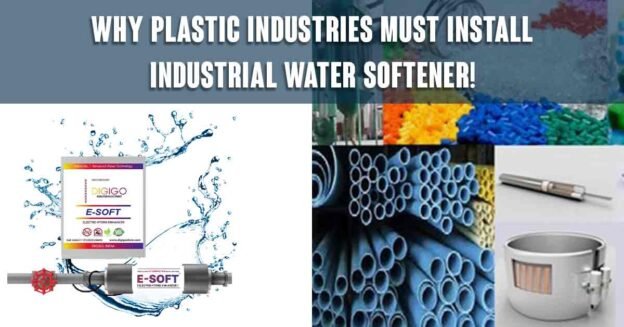
Why Should Plastic Industries Use Soft Water? 

Plastic-making industries should use Soft water because Water is highly used in the making of plastic and if the water is not good and has some flaws then the whole lot might get rejected and it will result in a loss to the industry. Soft Water will keep your machinery maintained as no scale or corrosion will be developed and the production will be increased as well. The life of the machinery might get upgraded as well. The soft water will complement the outcome of the production, that is, Plastic to have better quality and be more efficient. 

Why Should you Opt for Digigo Water Softener for Plastic Industries? 

You should opt for Digigo E-Soft as the Water Softener System for your Industry as Digigo E-Soft is the World’s First 5th Generation Water Softener System and it converts water electronically rather than using harmful chemicals or salts. This means your money will be saved which might get utilized on chemicals or salts if you would have purchased some other Water Softener System.

Moreover, the soft water from Digigo E-Soft will be so efficient that it will easily remove the existing scales from the surfaces. Moreover, it does not require regular maintenance or even monthly or yearly maintenance. It is budget friendly as well and the price is a lot less as compared to the benefits it provides. Digigo Industrial Water Softener also gives you a work-life of 30 years. The best thing about Digigo E-Soft is that it does not waste even a single droplet of water while softening the water, which means it is eco-friendly as well. 

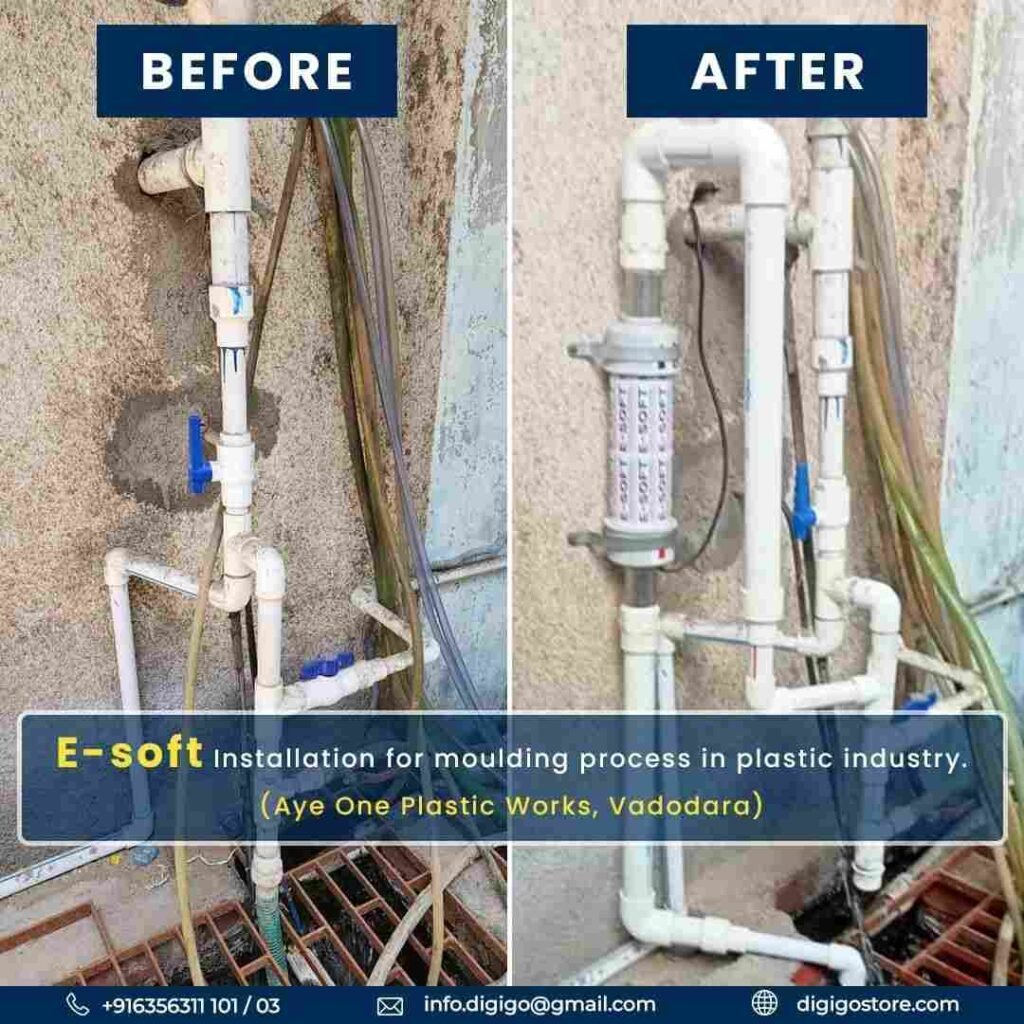
Below is a Testimonial of Digigo Industrial Water Softener for Plastic Industries installation at Aye One Plastic Works, Vadodara, Gujarat.

Digigo Industrial Water Softener installation at Aye One Plastic WorksVadodara Gujarat 390004
Innovative Industrial Water Softener Solution for Industrial Wastewater Treatment

The Eco-Friendly Solution for Industrial Wastewater Treatment

In the world of industries, where production and efficiency reign supreme, a silent challenge often goes unnoticed – Industrial Wastewater Treatment. From manufacturing plants to chemical factories, industrial processes’ byproducts can pose a significant threat to the environment and public health if not properly treated.

The Industrial Wastewater Treatment Plants (WWTPs) are the unsung heroes of industrial operations. These facilities are dedicated to removing contaminants and pollutants from wastewater before safely releasing them back into the environment. At the heart of these plants lie two critical components:

1) the Effluent Treatment Plant (ETP) and 2) the Sewage Treatment Plant (STP).

The Effluent Treatment Plants are Guardians of Environmental Integrity. The ETP is responsible for treating the wastewater generated from industrial processes, ensuring that harmful chemicals, heavy metals, and other pollutants are removed before discharge. This process is crucial in preserving the integrity of our water bodies and minimizing the impact on aquatic life and surrounding ecosystems.

The Sewage Treatment Plants are Safeguards of Public Health Complementing the ETP is the STP, which focuses on treating domestic wastewater from industrial facilities. This step is essential in preventing the spread of waterborne diseases and maintaining safe and hygienic conditions for workers and local communities.

The Regulatory Imperative

Meeting Pollution Control Board Standards In India, the Central Pollution Control Board (CPCB) and respective State Pollution Control Boards have set stringent guidelines for the Industrial Wastewater Treatment. These regulations aim to protect our precious water resources and promote sustainable practices within the industrial sector.

Failure to comply with these guidelines can result in hefty fines, legal repercussions, and, more importantly, severe environmental consequences. It is a responsibility that no industry can afford to neglect.

Introducing E-Soft Industrial Water Softener: The Sustainable Solution for Industrial Wastewater Treatment. While conventional wastewater treatment methods may have their limitations, E-Soft Industrial Water Softener offers a revolutionary approach that not only meets but exceeds the pollution control board’s standards. Our innovative water softening technology harnesses the power of low-frequency electronic pulses to break down hard minerals and impurities in wastewater, rendering it safe and reusable.

Benefits of E-Soft’s Industrial Water Softener for Industrial Wastewater Treatment

  1. Sustainable Water Management: E-Soft softens the wastewater from Reverse Osmosis (RO) processes, enabling industries to reuse this valuable resource for various purposes, such as gardening, toilets, and non-potable applications.
  2. Water Conservation: By recycling and reusing wastewater, industries can significantly reduce their water consumption, contributing to the conservation of this precious natural resource.
  3. Cost Savings: Conventional water softening methods often involve the use of chemicals and frequent maintenance, which can be costly. E-Soft’s eco-friendly technology eliminates these expenses, resulting in substantial long-term savings.
  4. Environmental Benefits: With no chemicals, salt, or water wastage, E-Soft’s water softening process aligns with sustainable practices, minimizing the industry’s environmental footprint.
  5. Regulatory Compliance: By consistently producing high-quality, softened wastewater that meets or exceeds pollution control board standards, industries can operate with confidence, avoiding legal and financial penalties.

Saving Water, Building a Better Future

At DIGIGO, we know industries struggle to balance production with caring for our environment. That’s why we created innovative Industrial Wastewater Treatment systems. These systems not only follow regulations but also help conserve precious water.

As India’s leading Industrial Water Softener manufacturer, we understand each industry has unique needs. That’s why we offer custom solutions for businesses across the country. Our E-Soft water softeners are designed to be easy to use, affordable, and kind to the environment by treating wastewater effectively.

We invite you, to join us on this journey! Together, we can create a more sustainable future where industries succeed while protecting our planet. By using our water softeners, you’ll be part of a team safeguarding our natural resources for future generations.

Let’s work together to show the world that industries can be environmental leaders, inspiring others to do the same. With E-Soft on your side, you can have industrial wastewater treatment that contributes to a greener tomorrow.

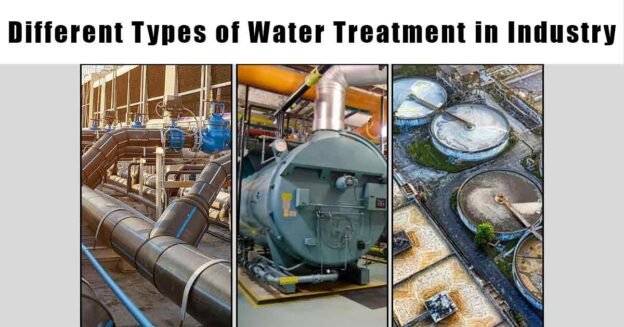
Different Types of Water Treatment Technology in Industry

How Different Water Treatment Technology Is Used In The Industries

What is an Industrial Water Treatment System? 

An industrial Water Treatment System is a system which is used to treat the Hard Water in industries and make it usable for production and for other works such as consumption and disposal. This system is used in every industry irrespective of what their work is and what they produce because every production requires Water to carry out processes. There various ways to treat water in industries such as: 

  • Raw Water Treatment Systems 
  • Boiler Feed Water Treatment Systems 
  • Cooling Tower Water Treatment Systems 
  • WasteWater Treatment Systems 

What is a Raw Water Treatment System? 

Raw water treatment System is usually used for industries because it is essential to make sure your raw water is a fine product in an efficient manner. The appropriate raw water treatment plant design will help the facility to avoid high-priced plants for future loss. The good design can also help to avoid the tricky issues and costly renovation fees. It is used to treat the flow of Raw Water into usable Water. 

What are Boiler Feed Water Treatment Systems? 

Boiler water treatment system is used to control alkalinity, prevent scaling, correct pH, and to control conductivity. The boiler water needs to be alkaline and not acidic, so that it does not ruin the tubes. There can be too much conductivity in the feed water when there are too many dissolved solids. 

What is a Cooling Tower Water Treatment System? 

Cooling tower water treatment involves using select filtration technologies and chemical products in order to remove toxic or otherwise damaging impurities from your cooling tower system. 

What is Wastewater Treatment System? 

Wastewater Treatment System is used to convert Water into usable form and hence, reduce the Wastage of Water. The most appropriate wastewater treatment system will help the facility avoid harming the environment, human health, and a facility’s equipment, process or products. It will also help the facility curb heavy fines and possible legal action if wastewater is being improperly discharged to either the environment or publicly owned treatment works. The relative complexity of a wastewater treatment system will depend heavily upon the compliance regulations impacting your plant and the composition of your waste stream. 

What Would happen if untreated Water is used? 

It is necessary to treat water before using it because untreated water can disrupt industrial processes. A high level of mineral content in water, for example, may create unwanted problems such as streaking and spotting during the application of industrial coatings. Minerals can build up on the components of industrial boiler equipment too, causing scaling. 

What is Digigo E-Soft? 

Digigo E-Soft is a revolution in the Water Softener industry. E-Soft is mastered in converting Hard Water into Soft Water. Moreover, in the conversion of Soft Water a lot of Water is wasted and disposed of in the environment which causes various forms of pollution such as, Water pollution, Air Pollution, land Pollution and other forms of pollution too. But with Digigo E-Soft, the water is converted electronically and fully without wasting a single droplet of Water. Made in India, Made by Indians. 

How is Digigo E-Soft better than all these systems for industries? 

Digigo E-Soft is free from the usage of chemicals which can be dangerous for your health as well as your appliance’s life. Moreover, it doesn’t require any Salt for conversion of Water.E-Soft helps to save a lot of energy as the Soft Water from Water Softener System is easily utilized in work tasks and other objectives as compared to Hard Water. Every production requires Water which is suitable and Soft Water is the best suited for your production. E-Soft does not promote any type of scale or corrosion, so that your appliances can work smoothly without any disruptions. Digigo E-Soft Made in India, Made by Indians.

Why-food-sector-need-water-softener-for-better-outcomes

The Crucial Role of Industrial Water Softener in India’s Food Sector

As a nation obsessed with flavors and culinary delights, India boasts a diverse and thriving food industry. From street food stalls to haute cuisine restaurants, food processing plants to beverage manufacturers – water plays a pivotal role in every aspect of this vital sector. However, the quality of water used can make or break the taste, safety, and shelf life of food products. This is where proper Industrial Water Softener becomes indispensable.

Importance of Water Quality In Food Sector

Water is arguably the most important ingredient in the food industry. It is not only used for cooking, cleaning, and sanitization purposes but also constitutes a major component of many food items. Thus, the quality of water used can directly impact:

Food Safety: Contaminants like harmful bacteria, chemicals, or particulate matter in water can easily find their way into food products, posing severe health risks to consumers. Proper treatment ensures water is free from such hazards.

Food Taste: The mineral composition of water can significantly influence the taste of beverages like tea, coffee, juices as well as cooked dishes. Hard water often imparts an unpleasant flavor due to its high dissolved solids content.

Shelf Life: Microbiological contaminants in water can accelerate spoilage, reducing the shelf life of perishable food items like dairy products, baked goods, and processed foods.

Equipment Performance: Hard water causes scale buildup in pipes, boilers, and other food processing equipment leading to frequent breakdowns, higher maintenance costs, and production delays.

Scale Buildup in Pipes

Importance of Industrial Water Softener in Food Sector

Given the immense importance of water quality, the food industry cannot afford to overlook effective water treatment measures. Here’s why investing in robust industrial water softener solutions is a necessity:

Consumer Health: As food manufacturers, ensuring consumer health and safety should be the topmost priority. Treating water eliminates disease-causing pathogens and toxic substances, preventing food contamination.

Brand Reputation: In today’s socially connected world, a single case of food poisoning can tarnish a brand’s reputation, leading to loss of consumer trust and financial implications. Proper water treatment mitigates such risks.

Operational Efficiency: Mineral-free treated water enhances the performance and longevity of food processing equipment, reducing downtime and associated costs. It also improves the efficiency of cleaning and sanitization processes.

Regulatory Compliance: The Food Safety and Standards Authority of India or FSSAI has stringent guidelines for the quality of water used in food businesses. Implementing adequate water treatment systems ensures compliance with these norms.

Introducing E-Soft Industrial Water Softener : The Water Treatment Specialist

In the realm of water treatment solutions for the food industry, E-Soft Water Softener for Industries stands tall as a pioneer and trusted name. With its cutting-edge water softening technology, E-Soft offers a comprehensive range of industrial water softeners designed to cater to the diverse needs of food businesses.

E-Soft Industrial Water Softener Advantage:

Effective Mineral Removal: E-Soft’s electronic pulse process efficiently neutralizes hardness-causing calcium and magnesium minerals from water, ensuring a soft water supply throughout your facility.

Customized Solutions: Whether you run a large-scale food processing plant or a modest eatery, E-Soft offers tailored water softening systems to match your specific water treatment requirements.

Improved Taste and Quality: By providing soft, mineral-rich water, E-Soft enhances the natural flavours of your food and beverage products, ensuring consistent taste and quality.

Prolonged Equipment Life: Soft water significantly reduces scale buildup, corrosion, and mineral deposits in pipelines, boilers, and other equipment, extending their operational life.

Cost Savings: With Industrial E-Soft, you can bid farewell to frequent equipment repairs, excess chemical usage, and inefficient cleaning processes, translating into substantial cost savings.

Environmental Responsibility: DIGIGO’s water softeners operate on a mineral breakdown process, which is an eco-friendly and sustainable water treatment method without any wastage of water. 

Digigo Esoft Industrial Water Softener Installation at DUKE PUMPING SOLUTIONS Pvt Ltd. Palanpur.
DIGIGO Industrial Water Softener Installation

The food industry’s growth and success are intrinsically tied to the quality of water used in its operations. By partnering with E-Soft Industrial Water Softener, food businesses can prioritize consumer health, maintain brand integrity, optimize operational efficiency, and stay ahead of the curve in an increasingly competitive market.

Don’t let water quality be the weak link in your food business. Invest in E-Soft’s industry-leading water softening solutions and unlock the full potential of your culinary endeavors. Because when it comes to food, compromising on water quality is simply not an option.