Tag Archives: Water Softener System for Industries

Is Water Treatment the Next Frontier of Climate Change

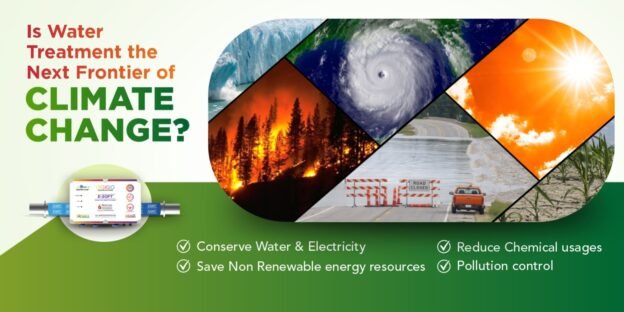
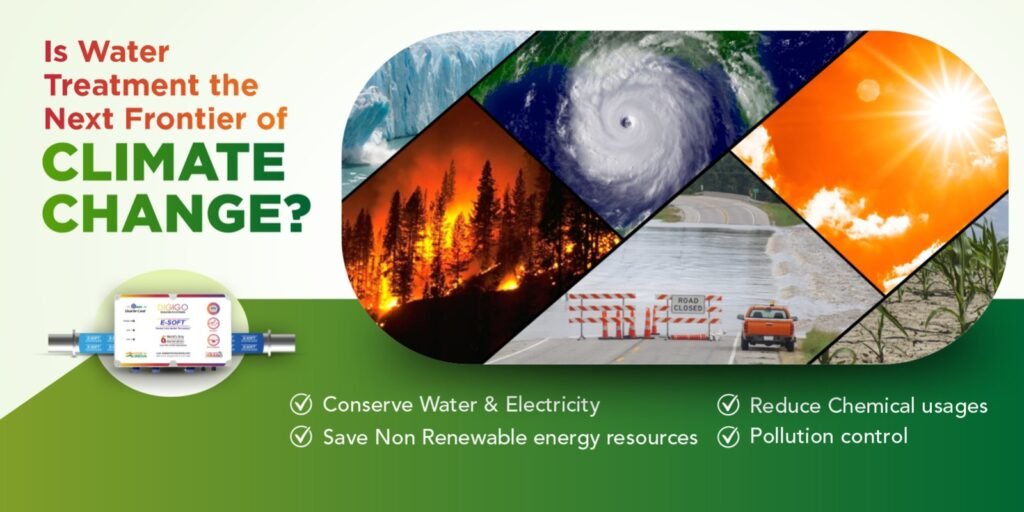
Is Water Treatment the Next Frontier of Climate Change?

Just two days ago, a major incident in Kanpur made headlines.

Two large treatment plants were forced to shut down, not because of a technical failure, but because they couldn’t keep up with electricity costs. Within hours, lakhs of litres of untreated sewage began flowing directly into the river.

It wasn’t just a pollution story. It was a system failure.

A reminder that water treatment today is not just about filtration or compliance, it’s deeply tied to energy, cost, and infrastructure resilience.

And this isn’t an isolated case. Across India, industrial zones are seeing water demand surge with expansion. As consumption rises, so does the energy required to pump, heat, treat, and circulate that water.

What we often overlook is this:

Water systems don’t just consume water; they consume energy, money, and stability.

And when inefficiencies build up inside them, the cost is not always visible, but it is always paid.

Which brings us to a critical question: What if water treatment is not just an operational necessity anymore but the next frontier of climate action?

The Intersection of Water, Energy, and Carbon

Every industrial process that uses water is also using energy. But the real impact begins when water quality interferes with system performance.

Hard water, rich in calcium and magnesium, quietly alters how systems behave. As it flows through pipelines, boilers, and cooling systems, it begins forming scale deposits on internal surfaces.

At first, this buildup is invisible.

Then gradually, systems start compensating.

  • Heat exchangers take longer to transfer heat
  • Boilers consume more fuel to maintain output
  • Pumps work harder to push water through narrowed pathways
  • Maintenance cycles become more frequent

What looks like a minor mineral issue becomes an energy problem. And energy problems eventually become carbon problems.

Even a thin layer of scale can significantly reduce thermal efficiency. Over time, this leads to increased emissions, not because production increased, but because systems became inefficient.

This is where the role of an Industrial Water Softener becomes more strategic than operational.

It’s no longer just about preventing deposits. It’s about protecting energy efficiency at its core.
Is Water Treatment the Next Frontier of Climate Change

Sustainable Technologies: The Tools of Change

For decades, industries have relied on conventional softening methods, primarily salt-based ion exchange systems.

While effective in reducing hardness, they come with hidden costs:

  • High water consumption during regeneration cycles
  • Continuous dependence on salt and chemicals
  • Wastewater discharge that requires further handling
  • Operational interruptions for maintenance

In a world moving toward sustainability, these trade-offs are becoming harder to justify.

This has led to a new category of solutions, ones that focus not on removing minerals, but on changing how they behave inside systems.

Electronic water softening treatment is one such approach.

Instead of extracting calcium and magnesium, it uses controlled electronic signals to alter their structure. Large mineral clusters are broken down into much finer particles, reducing their tendency to stick to surfaces.

This means:

  • Minerals stay in water but remain inactive
  • Scale formation is significantly reduced
  • Existing deposits may gradually weaken over time

What makes this approach relevant to climate action is its simplicity.

No chemicals.
No salt.
No water wastage.

Just a shift in how water interacts within the system. Modern water softener system for industries are increasingly being evaluated through this lens, not just performance, but also environmental impact.

And this is where technologies like E-Soft begin to fit naturally into the conversation.

Why the Shift is Happening Now

This transition toward smarter water treatment isn’t accidental. It’s being driven by multiple real-world pressures.

1. Energy is Becoming Unpredictable

As seen in the Kanpur incident, energy costs can directly disrupt water systems.

Industries are realizing that reducing energy dependency is not optional; it’s essential for stability.

2. Sustainability is Now Measurable

ESG frameworks are pushing industries to quantify their environmental impact.

Water systems, once ignored, are now being evaluated for:

  • Energy efficiency
  • Waste generation
  • Chemical usage

This is changing how decisions are made.

3. Water Scarcity is Reshaping Priorities

In many industrial regions, water availability is no longer guaranteed.

Systems that waste water during treatment cycles are becoming less viable. Efficiency is no longer just about cost; it’s about continuity.

4. Hidden Costs are Becoming Visible

Earlier, scaling, maintenance, and energy losses were treated as separate issues. Now, industries are connecting the dots.

They are beginning to see how water quality impacts:

  • Equipment lifespan
  • Downtime frequency
  • Overall operational efficiency

This shift in understanding is why conversations around how E-Soft Water Softener works in industries are gaining relevance not just as a technical explanation, but as a strategic approach to system optimization.

From Water Treatment to Water Behavior

What’s changing today is not just technology but mindset. Traditional systems focused on removal.

Remove hardness. Remove impurities. Remove risk. But removal always comes at a cost of chemicals, water, or energy.

The new approach is different.

It asks:

  • Can we keep minerals but make them harmless?
  • Can we reduce intervention instead of increasing it?
  • Can systems become self-efficient instead of dependent?

This is where behavior-based treatment stands out.

By influencing how minerals act rather than eliminating them, it reduces the need for continuous external inputs.

Solutions like E-Soft follow this philosophy. They work silently within existing infrastructure, improving performance without adding complexity.

And in doing so, they align more closely with the principles of sustainability.

Where DIGIGO E-Soft Fits in Industries

As industries rethink water systems from a sustainability lens, companies focusing on system-level efficiency are becoming more relevant.

DIGIGO operates in this space, looking at water not just as a resource, but as a behavior within infrastructure.

Their E-Soft solution reflects this shift.

Instead of altering water composition, it works on mineral dynamics, reducing scale formation and improving system efficiency without chemicals or regeneration cycles.

In practical terms, the benefits of E-Soft Industrial Water Softener extend across multiple layers:

  • Lower energy consumption due to better heat transfer
  • Reduced maintenance and downtime
  • No water wastage from regeneration
  • Minimal environmental discharge

All without disrupting existing operations. It’s a subtle intervention, but one that creates measurable impact over time.

Final Perspective

Climate action is often associated with large-scale transformation. But in reality, some of the most powerful changes happen within systems we rarely see.

Water treatment is one of them. It sits quietly at the intersection of energy, infrastructure, and sustainability.

And as industries search for practical ways to reduce their environmental footprint, it’s becoming clear that optimizing water systems is not just a technical upgrade; it’s a strategic move.

The future of climate action may not only depend on how we generate energy. But also on how efficiently we use it.

And in that equation, water might just be the most underestimated variable.
How an Industrial Water Softener Works Step-by-Step Technical Guide

How an Industrial Water Softener Works: Step-by-Step Technical Guide

On a summer afternoon, a plant head in Gujarat noticed something odd. Water consumption had gone up, even though production hadn’t.

No leaks.
No expansion in capacity.
No visible fault.

Still, the cooling tower demanded more makeup water. The boiler took longer to reach temperature. The maintenance team blamed the weather first. Then the equipment.

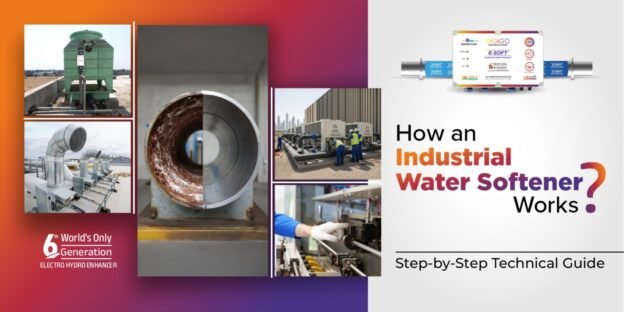
Weeks later, during a routine inspection, a section of pipe was opened. What they saw was not damage. It was a buildup. A thick, stubborn layer silently narrowing the system from within.

This is the part most industries don’t see. Water enters clean. Systems are designed perfectly. But over time, something changes inside. This guide is about that change. And how different water softening systems respond to it.

The Core Problem: What is Hard Water?

Hard water contains dissolved minerals, mainly calcium and magnesium. These minerals are natural, especially in groundwater sources widely used across industrial regions.

The challenge begins when water is continuously circulated through systems.

Here is how it unfolds in real operations:

●      Layer formation inside pipes

Minerals settle gradually on pipe walls. Flow paths shrink, and pressure distribution becomes uneven.

●      Reduced efficiency in heat-based systems

Boilers and chillers depend on direct heat exchange. Scale acts as a barrier, forcing systems to consume more energy.

●      Increased wear on mechanical components

Pumps and valves work harder to maintain flow. This leads to faster degradation.

●      Higher reliance on chemical correction

Many facilities introduce chemicals to manage deposits, which adds cost and operational effort.

Hard water does not interrupt production immediately. It slowly reshapes system behavior. That is why industries turn to solutions like an Industrial Water Softener to maintain consistency.

How an Industrial Water Softener Works Step-by-Step Technical Guide

A Technical Comparison between Competitor & DIGIGO E-SOFT

Understanding how a softener works requires looking at how different technologies approach the same problem.

Conventional Systems: Step-by-Step Process

Most traditional systems use ion exchange technology.

Here is the working process:

  1. Water enters a resin-filled tank: The resin is preloaded with sodium ions.
  2. Mineral exchange takes place: Calcium and magnesium attach to the resin. Sodium replaces them in the water.
  3. Softened water flows out: Hardness is reduced as minerals are removed.
  4. Regeneration cycle begins: Once the resin is saturated, a salt solution is used to recharge it.
  5. Waste discharge occurs: The process releases mineral-rich wastewater.

This method is effective in reducing hardness levels. But it introduces ongoing dependencies:

  • Regular salt consumption
  • Scheduled regeneration downtime
  • Additional water usage
  • Chemical handling

DIGIGO E-Soft: Step-by-Step Working

DIGIGO approaches water softening as an infrastructure challenge rather than a chemical one.

Here is How E-Soft Water Softener works in industries:

  1. Non-intrusive installation: A signal cable is wrapped externally around the pipeline. No cutting or redesign is needed.
  2. Digital signal generation: The system produces programmed low-frequency electronic impulses.
  3. Interaction with flowing water: These signals pass through the pipe and influence the water moving inside.
  4. Mineral size reduction: Larger mineral clusters are broken down into particles around 0.5 microns.
  5. Behavioral change in minerals: Calcium and magnesium remain present but become less likely to stick to surfaces.
  6. Controlled scaling inside systems: New deposits reduce significantly, and existing buildup becomes easier to manage over time.

This is the working principle of the E-Soft Industrial Water Softener.

There are no consumables involved.
There is no regeneration cycle.
There is no change in mineral content.

The system works continuously as water flows through it.

Operational Perspective

When applied in real industrial environments, the difference becomes practical:

  • Conventional systems focus on pre-treatment
  • E-Soft works within the system flow itself
  • Traditional setups need monitoring and replenishment
  • E-Soft runs with minimal operational involvement
  • Chemical-based systems create discharge
  • E-Soft keeps the process clean from additives

This shift changes how industries manage water over the long term.

What are the Considerations of Water Softeners for Industrial Use?

Choosing the right Water Softener System for Industries requires looking beyond specifications. It is about fit, function, and long-term impact.

1. Type of Application

Different industries interact with water differently.

  • Food processing focuses on consistency
  • Textile units depend on uniform reaction
  • Heavy industries rely on thermal efficiency

The solution must align with the process.

2. Ease of Integration

Industrial environments are already complex.

  • Does installation require shutdown?
  • Will it disturb existing layouts?

E-Soft integrates externally, which reduces disruption during setup.

3. Operational Stability

Continuous operations demand reliable performance.

  • Can the system handle fluctuating loads?
  • Will efficiency remain stable over time?

Consistency matters more than peak performance.

4. Maintenance Effort

Maintenance often becomes a recurring burden.

  • Salt-based systems need regular input
  • Chemical methods require supervision

One of the key Benefits of E-Soft Industrial Water Softener is the reduction in such routine tasks.

5. Cost Over Time

Initial pricing does not reflect long-term value.

Consider:

  • Energy usage due to scaling
  • Maintenance frequency
  • Equipment lifespan

A system that supports efficiency helps control indirect costs.

6. Environmental Impact

Industrial water use is closely linked to sustainability.

  • Chemical discharge affects treatment plants
  • Water wastage increases resource pressure

A system that operates without additives simplifies compliance and reduces environmental load.

Closing Take

Water does not change its nature overnight. But its effect on systems becomes visible over time.

Industrial operations depend on flow, heat transfer, and consistency. When mineral behavior interferes with these, performance begins to shift.

A traditional Industrial Water Softener focuses on removing minerals. DIGIGO focuses on managing how those minerals behave inside systems.

This difference changes how industries experience water over months and years. Instead of reacting to scale after it forms, the approach becomes about preventing resistance before it builds.

That is where infrastructure thinking starts making sense.

FAQ’s

1. What is the basic working principle of an industrial water softener?

Most systems either remove hardness minerals or control their behavior to reduce scaling inside equipment.

2. Does E-Soft remove minerals from water?

No. It changes the behavior of minerals so they do not form hard deposits.

3. Where is E-Soft typically installed?

It is installed externally on pipelines, making it suitable for boilers, cooling towers, and process lines.

4. Does it require regular maintenance?

It operates electronically and does not require salt or chemical refilling.

5. Which industries can use it?

Manufacturing, food processing, pharmaceuticals, and other water-intensive sectors can benefit from it.

If systems start asking for more without a clear reason, it is worth looking beyond machines. Sometimes, the real change is happening inside the water itself.