
Tag Archives: Water Softener for Agriculture

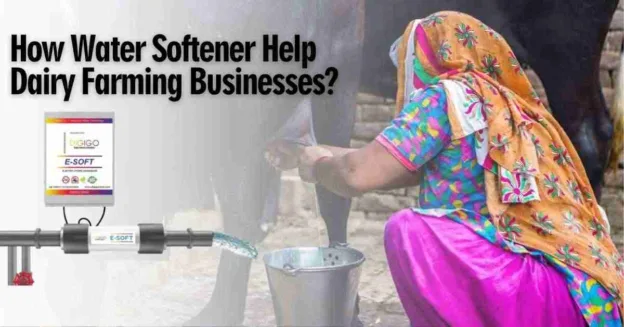
How E-Soft Water Softener Help in Dairy Farming

More Milk, More Money with E-Soft Water Softener for Agriculture [Dairy Farming]

As a proud dairy farmer in India, you know that the secret to a successful dairy business lies in the health and productivity of your cattle. From providing nutritious feed to ensuring proper shelter and care, you leave no stone unturned in creating an ideal environment for your precious herd to thrive.

However, among all these efforts, there is one crucial factor that often gets overlooked – the quality of water your animals consume daily. You see, hard water, which contains high levels of dissolved minerals like calcium and magnesium, can have harmful effects on your animals’ well-being and milk output. But fret not, for there’s a simple yet highly effective solution – investing in a reliable water softener for dairy farming!

The Hard Water Problems in Dairy Farming

Before we delve into the benefits of soft water in dairy farming, let’s understand how hard water can create problem in your dairy operations:

Digestive Distress: Hard water can disrupt the delicate digestive system of cattle, leading to issues like constipation, diarrhea, and nutrient malabsorption. This, in turn, affects their overall health and productivity.

Reduced Water Intake: The unpleasant taste and mineral content of hard water often discourage cattle from drinking enough, leading to dehydration and decreased milk yield.

Poor Milk Quality: Minerals present in hard water can alter the composition of milk, affecting its taste, fat content, and overall quality.

Equipment Corrosion: The high mineral levels in hard water can cause scale buildup and corrosion in milking equipment, watering troughs, and pipelines, necessitating frequent repairs and replacements.

Enter E-Soft Water Softener for Dairy Farm: The Dairy Farmer’s Best Friend

Established as India’s #1 water softener brand, E-Soft offers cutting-edge water softening technology that can transform your dairy farming operations. By removing hardness-causing minerals through a mineral neutralizing process, E-Soft Water Softener for Agriculture delivers soft, pure water throughout your farm, unlocking bundles of benefits:

Increased Water Intake: With the improved taste and quality of soft water, your cattle will be encouraged to drink more, ensuring proper hydration and aiding digestion.

Boosted Milk Production: Numerous dairy farmers have reported a remarkable 50% increase in milk yield per milking after switching to soft water from Digigo E-Soft Water Softener for Agriculture!

Enhanced Milk Quality: Not only does soft water increase milk production, but it also improves the fat content and overall quality of the milk. Many farmers have witnessed a surge in milk fat levels, from 28-30% to an impressive 38-40%!

Improved Animal Health: By facilitating better digestion and hydration, soft water contributes to a remarkable 70% improvement in the overall health and well-being of your animals.

Extended Equipment Life: With soft water, you can bid farewell to mineral buildup and corrosion, ensuring your milking equipment, pipelines, and troughs last longer and operate more efficiently.

Don’t just take our word for it! Here’s what one of our satisfied clients, a renowned dairy farmer, has to say about the transformative impact of E-Soft water softener for Agriculture:

By investing in an E-Soft Water Softener for Agriculture tailored explicitly for agricultural industry, you’re not just ensuring the well-being of your cattle but also safeguarding the long-term success and profitability of your dairy farming business.

The Choice is Clear: ESoft Water Softener for Agriculture [Diary Farming]

In the competitive world of dairy farming, every advantage counts. By addressing the often-overlooked issue of hard water, you can gain a significant edge over your competitors. E-Soft’s innovative water softening technology for Agriculture and dairy farming empowers you to:

  • Maximize milk production and fat
  • Enhance animal health and well-being
  • Optimize operational efficiency and cost-effectiveness
  • Ensure long-lasting, reliable farm equipment

With such a comprehensive set of benefits, investing in an E-Soft agriculture water softener is a no-brainer for any forward-thinking dairy farmer committed to sustainable growth and profitability.

Don’t let hard water hold your dairy farming dreams back any longer. Embrace the power of soft water and witness your cattle, milk output, and bottom line flourish like never before. After all, in the world of dairy, every drop of soft water counts!

Elevate your dairy farming operations to new heights with E-Soft Water Softeners – India’s trusted name in industrial, residential, commercial and agricultural water softening solutions.

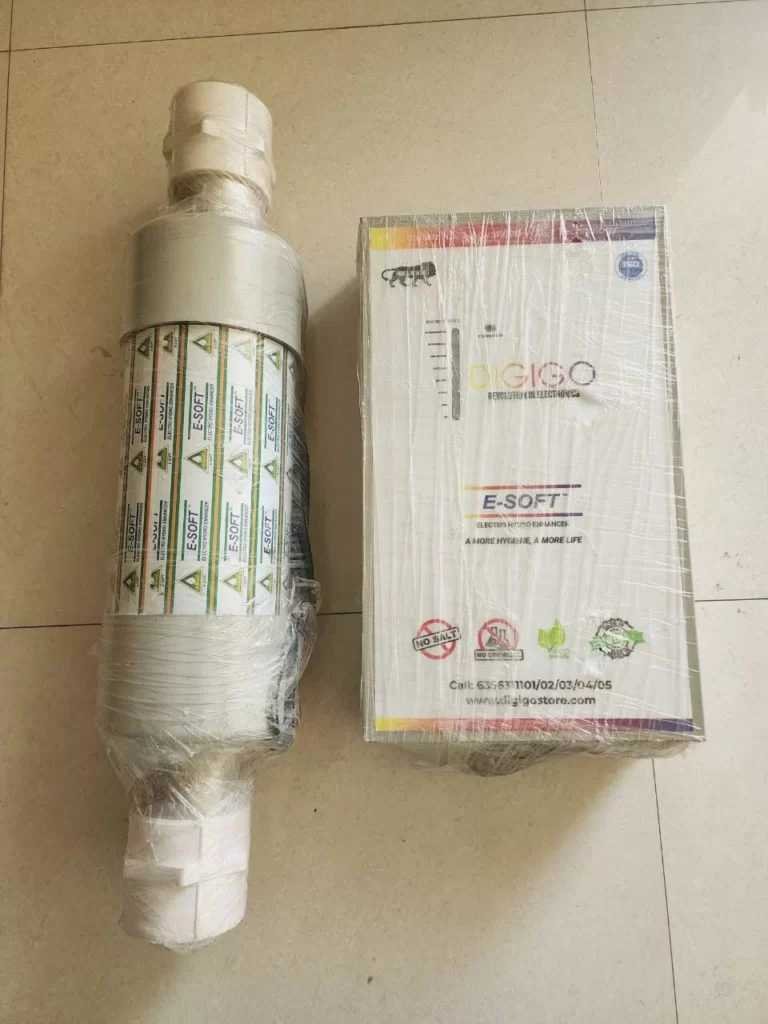
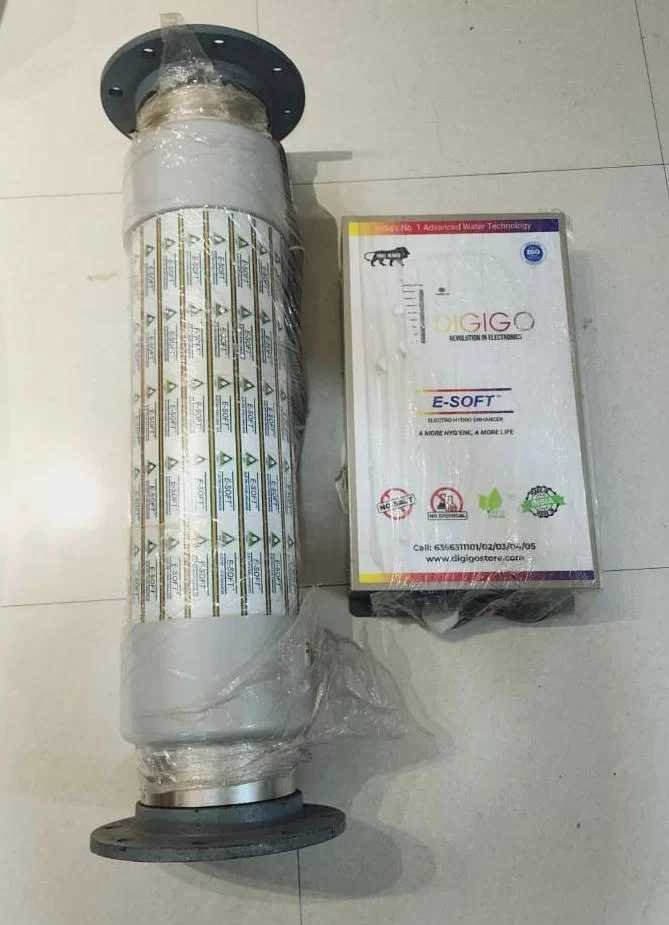
Digigo Esoft Water Softener for Agriculture
Digigo ESoft-Water Softener for Dairy Farming

Visit Digigo to learn more about our tailored offerings and embark on a journey towards unlimited dairy success!

Other Related Article

Why Digigo ESoft is the Best Agriculture Water Softener in 2024?

From seed to Harvest: How E-Soft Agriculture Water Softener Empowers Modern Agriculture

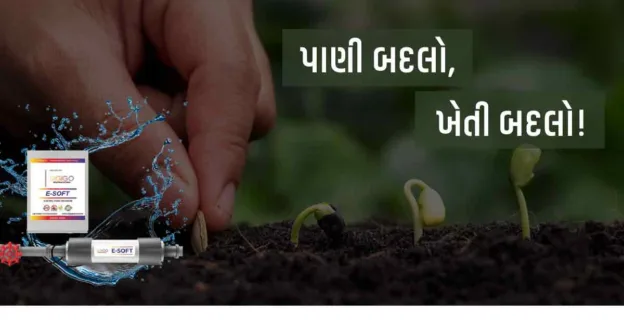
เช‡-เชธเซ‹เชซเซเชŸ เชตเซ‹เชŸเชฐ เชธเซ‹เชซเซเชŸเชจเชฐเชจเซ€ เชฎเชฆเชฆเชฅเซ€ เชชเชพเชฃเซ€ เชฌเชฆเชฒเซ‹, เช–เซ‡เชคเซ€ เชฌเชฆเชฒเซ‹!

Why-Invest-in-Digigo-ESoft-Water-Softeners

7 Advantages of DIGIGO Water Softeners : A Market-Leading Water Softener Solution

In this blog, We shared top 7 advantages of Digigo Water Softeners.

DIGIGO Water Softeners DOMESTIC GRADE
DIGIGO Water Softener-DOMESTIC GRADE
DIGIGO Water Softeners INDUSTRIAL GRADE
DIGIGO Water Softeners-INDUSTRIAL GRADE

Digigo E-Soft doesnโ€™t use chemicals or salt

For softening the water Digigo doesnโ€™t use any chemical or salt. This means Digigo water softeners is free from harmful chemicals that could act as a slow poison in the long run as well as salt that could result in severe health problems. In Salt softener which uses salt to make Soft Water there are a lot of residues left but in E-Soft no residue is left. Salt Softeners uses sodium that is left making residue and making it toxic. Moreover, the environment also remains healthy and green due to less wastage of water as well as less concentrated water. That means Reduction in Water pollution as well as land pollution.ย 

No requirement of maintenance

DIGIGO Water Softeners doesnโ€™t not require regular maintenance, that means savings in money and increase in productivity yayyyyy! Digigo E-Soft is capable enough to go without maintenance, even if it is weekly, monthly or yearly maintenance. Now that is called a smart product. Are you smart enough to understand the intelligence of this product? We think you are, what do you say?ย 

Decrease in money usage

Money usage on salt keeps on decreasing as with Digigo Water Softener System, you donโ€™t have to purchase salt to soften your water or convert hard water into soft water. Again savings of money double yayyyyy! No usage of Salt means natural water with natural minerals, beneficial for your health. Now thatโ€™s healthy, isnโ€™t it?ย 

Reduction in electricity bill

We are again gonna save your money, you ask how? Through your electricity bill. We will reduce your electricity bill to a minimum amount with our DIGIGO Water Softeners as the Soft Water will be heated easily in the geyser and your geyser will be operated in the optimum level and the Soft Water will be heated with 30% less energy, saving your money about 30% in your electricity bill. As you donโ€™t require to work with hard water after the installation of Digigo, So the energy used to work with hard water will be reduced to minimum, saving lots of money. Now That’s good, isn’t it?ย 

Reasonable price

Letโ€™s save your money once again, shall we? With DIGIGO Automatic Water Softeners benefits there is one more benefit that the price of our product is reasonable. Whether it is residential, commercial, Industrial or Agriculture sector we are keen to serve each and every sector and that too at a low price. Our product is reasonable as well as reliable irrespective of the sectors. Our prices are lower than the savings of yours after installing our product. Digigo E-Soft is highly beneficial, isnโ€™t it?ย 

Relief from corrosion

DIGIGO Water Softeners will remove your lime and corrosion generated ages before too. Within 3 months, your lime or corrosion will disappear like there was no corrosion. Not a single stain. Now that is called an ideal product doesnโ€™t it?ย 

Huge lifespan

The life of DIGIGO Water Softeners is more than 30 years, isnโ€™t it fabulous? That means even generations will change but Digigo E-Soft will keep on working and treating your Hard Water problems. This also means no requirement of a new E-Soft machine for about 30 years, SAVINGS SAVINGS SAVINGS!!! Seems like Digigo E-Soft is the metaphor for savings, doesnโ€™t it?ย 

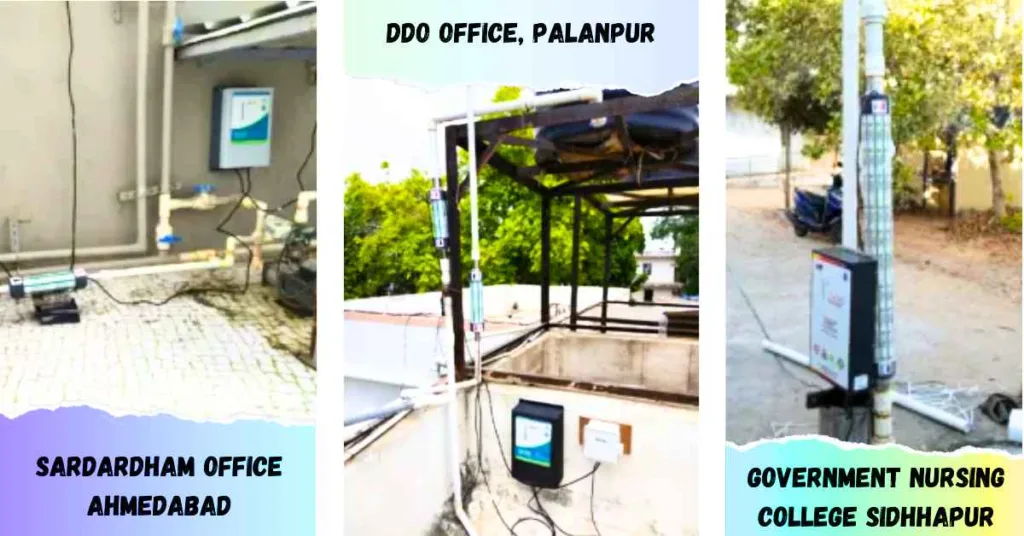
Easy Installation of Digigo Water Softeners at various places

Are you convinced to go for our Digigo DIGIGO Water Softeners? If not, it’s totally fine, you can read other blogs too on our website or read more about our product or aout us and then make a decision. Weโ€™ll be waiting to hear from you.

DIGIGO Water Softeners in Various Sectors

DIGIGO Water Softener for Home

DIGIGO Water Softener for Agriculture

DIGIGO Water Softener for Industry

DIGIGO Water Softener for Commercial Use

Moden Agriculture with Agriculture Water Softener

From Seed to Harvest: How E-Soft Agriculture Water Softener Empowers Modern Agriculture

For generations, Indian farmers have contended with the challenges of hard water in their fields. These hidden minerals, while seemingly innocuous, pose a significant threat to soil health, crop yields, and ultimately, farmerโ€™s income. Fortunately, innovative solutions like E-Soft’s Hard water to soft water converter for agriculture are emerging to rewrite the story, offering a path towards sustainable and bountiful harvests.ย 

Letโ€™s learn the role of E-Soft in the six steps of farming from ploughing to harvesting. E-Soft Agriculture Water Softener can transform the whole of farming along with doubling the income of farmers.

Impact of Agriculture Water Softener in Farming

Soft Water Ploughing

The journey begins with ploughing the land. Hard water, with its high mineral content, can clump soil particles, making it difficult to achieve a fine, even tilth. E-Soft Agricultural Water Softener comes to the rescue by providing soft water, which effortlessly mixes with soil, making it porous and breathable ensuring optimal seedbed preparation and laying the foundation for healthy plant growth.

Nurturing Seeds 

Sowing seeds is an act of hope. However hard water can hinder this hope by reducing the soil’s ability to retain moisture. E-Soft water softener changes the game. By providing soft water, it enhances the soil’s water-holding capacity, ensuring vital moisture, allowing oxygen and nitrogen to reach the newly planted seeds, promoting germination and fostering vigorous seedling development.

Nutrients with Soft Water

The claim that soft water eliminates the need for fertilizer entirely is a topic of ongoing research and debate. Softened water can indeed improve nutrient uptake by plants. However, there’s no denying the benefits of E-Soft water softener in enhancing land fertility. E-Soft breaks down the minerals into 0.5 microns and this way minerals do not block the surface. The same minerals that were a nuisance are now converted into fertilizer. Due to the availability of nutrients such as Calcium, Magnesium, Oxygen, and Nitrogen in the water; the plant reduces the need for outside nutrients. E-Soft reduces overall 70% of the fertilizer requirements.

Efficient Irrigation

Irrigation is the lifeblood of agriculture, and hard water can be its silent destroyer. Minerals accumulate in pipes and equipment, hindering water flow and reducing irrigation efficiency. E-Soft water softener acts as a guardian, preventing salt build-up and keeping pipes clean. This ensures smooth water flow, optimizes sprinkler and drip irrigation performance, and minimizes water wastage. E-Soft has succeeded in saving a crucial resource in today’s world: WATER!

Protecting Your Crops

Hard water acts as a breeding ground for fungal and bacterial diseases. Excess mineral content creates an ideal environment for the emergence of these diseases, which lead to leaf spots as well as yellow spots, root rot and other plant diseases. After watering with E-Soft, plants get nutrients like Oxygen, Nitrogen, Calcium and Magnesium from the water itself. Hence the crop plants become stronger and the immunity of the crop increases which eventually keeps plants healthy by preventing the yellowing of crop plants.

Maximizing Your Harvest

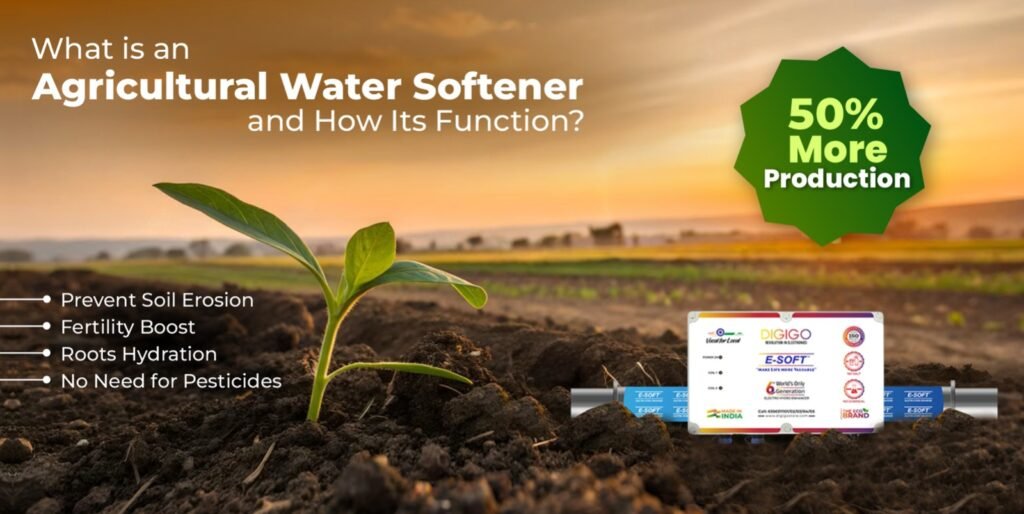
Hard water doesn’t stop at pipes. It can also impact plant health, leading to yellowing and stunted growth. Soft water, on the other hand, promotes vibrant foliage and robust plant development. By combating the harmful effects of hard water, E-Soft water softener strengthens the roots of the crops and the immune system of the plants has been increased. Eventually, it improves crop quality and productivity by 10% to 50%. Overall, E-Soft agriculture water softener can be a valuable tool for farmers who are looking to improve their crop productivity and profitability.

Increased Income and Sustainability

The culmination of these benefits lies in the harvest. By nurturing soil health, enhancing water utilization, and promoting healthy plant growth, E-Soft Agriculture water softener paves the way for bountiful harvests. This translates to a 50% increased income for farmers, empowering them to invest in further agricultural development and ensure the sustainability of their land for generations to come.

Future of Agriculture with E-Soft

Investing in E-Soft water softener for agriculture is not just about acquiring a product; it’s about embracing a future of sustainable and efficient agriculture. By harnessing the power of soft water, you can till with ease, nurture your seeds with confidence, unlock the full potential of your soil, and reap the rewards of a flourishing harvest. Contact us today and discover how E-Soft can transform your farm from the ground up.

Change Water Chnage Farming with Agriculture Water Softener

เช‡-เชธเซ‹เชซเซเชŸ เชตเซ‹เชŸเชฐ เชธเซ‹เชซเซเชŸเชจเชฐเชจเซ€ เชฎเชฆเชฆเชฅเซ€ เชชเชพเชฃเซ€ เชฌเชฆเชฒเซ‹, เช–เซ‡เชคเซ€ เชฌเชฆเชฒเซ‹!

เชธเชฟเช‚เชšเชพเชˆ เช…เชจเซ‡  เชชเชพเชฃเซ€

เชถเซเช‚ เชคเชฎเซ‡ เช•เซเชฏเชพเชฐเซ‡เชฏ เชตเชฟเชšเชพเชฐเซเชฏเซเช‚ เช›เซ‡ เช•เซ‡ เชถเชพ เชฎเชพเชŸเซ‡… 

  • เช–เซ‚เชฌ เชฎเชนเซ‡เชจเชค เช•เชฐเชตเชพ เช›เชคเชพเช‚, เชชเชพเช• เชคเซ‡เชฎเชจเซ€ เชธเช‚เชชเซ‚เชฐเซเชฃ เช•เซเชทเชฎเชคเชพเช เชŠเช—เซ€ เชถเช•เชคเซ‹ เชจเชฅเซ€? 
  • เชถเชพ เชฎเชพเชŸเซ‡ เชคเชฎเชพเชฐเชพ เช›เซ‹เชก เชจเชฟเชฐเชพเชถเชพเชœเชจเช• เช‰เชชเชœเชฎเชพเช‚ เชกเซ‚เชฌเซ€ เช—เชฏเชพ เชนเซ‹เชฏ เชคเซ‡เชตเซเช‚ เชฒเชพเช—เซ‡ เช›เซ‡?
  • เชถเชพ เชฎเชพเชŸเซ‡ เชตเชพเชฐเช‚เชตเชพเชฐ เชธเชฟเช‚เชšเชพเช‡ เช•เชฐเชตเชพ เช›เชคเชพเช‚ เชœเชฎเซ€เชจ เชถเซเชทเซเช• เชฅเชˆ เชœเชพเชฏ เช›เซ‡?

เช†เชจเซ‹ เชœเชตเชพเชฌ เช›เซ‡ เชชเชพเช•เชจเซ‡ เชชเซ‹เชทเชฃ เช†เชชเชจเชพเชฐเชพ เชชเชพเชฃเซ€เชฎเชพเช‚…

เชจเชฟเชฐเชพเชถ เชจ เชฅเชพเช“! เช† เชฌเซเชฒเซ‹เช— เชคเชฎเชพเชฐเซ‹ เชฎเชพเชฐเซเช—เชฆเชฐเซเชถเช• เช›เซ‡. เช…เชฎเซ‡ เชคเชฎเชจเซ‡ เชฌเชคเชพเชตเซ€เชถเซเช‚ เช•เซ‡ เชนเชพเชฐเซเชก เชตเซ‰เชŸเชฐ เชธเชฎเชธเซเชฏเชพเช“เชจเซ‡ เช•เซ‡เชตเซ€ เชฐเซ€เชคเซ‡ เชถเซ‹เชงเชตเซ€, เชคเซ‡เชจเซ€ เชฏเซเช•เซเชคเชฟเช“ เชธเชพเชฎเซ‡ เชฒเชกเชตเซเช‚, เช…เชจเซ‡ เชคเชฎเชพเชฐเชพ เชงเซ‚เชณเชตเชพเชณเชพ เช•เซเชทเซ‡เชคเซเชฐเซ‹เชจเซ‡ เชธเชฎเซƒเชฆเซเชง เช–เซ‡เชคเซ€เชฎเชพเช‚ เชซเซ‡เชฐเชตเชตเซเช‚. 

เชธเช–เชค เชชเชพเชฃเซ€เชจเชพ เชชเชกเช•เชพเชฐเซ‹ 
เชธเชฟเช‚เชšเชพเชˆเชฎเชพเช‚ เช•เซเชทเชพเชฐ: 

เชœเซเชฏเชพเชฐเซ‡ เชคเชฎเซ‡ เช–เชพเชฐเชพ เชชเชพเชฃเซ€เชฅเซ€ เชธเชฟเช‚เชšเชพเชˆ เช•เชฐเซ‹ เช›เซ‹ เชคเซเชฏเชพเชฐเซ‡ เชคเชฎเซ‡ เช•เชฟเช‚เชฎเชคเซ€ เช›เซ‹เชกเชจเซ‡ เชฎเชพเชคเซเชฐ เช•เซเชทเชพเชฐ เช†เชชเซ€ เชฐเชนเซเชฏเชพ เช›เซ‹. เช–เชจเชฟเชœเซ‹, เช–เชพเชธ เช•เชฐเซ€เชจเซ‡ เช•เซ‡เชฒเซเชถเชฟเชฏเชฎ เช…เชจเซ‡ เชฎเซ‡เช—เซเชจเซ‡เชถเชฟเชฏเชฎ, เชคเชฎเชพเชฐเซ€ เชœเชฎเซ€เชจเชฎเชพเช‚ เชฎเซ€เช เชพเชจเซ€ เชœเซ‡เชฎ เช•เชพเชฐเซเชฏ เช•เชฐเซ‡ เช›เซ‡. เชœเซ‡ เชฎเซ‚เชณเชฎเชพเช‚เชฅเซ€ เชญเซ‡เชœเชจเซ‡ เชฆเซ‚เชฐ เช•เชฐเซ‡ เช›เซ‡ เช…เชจเซ‡ เชชเซเชฐเชคเชฟเช•เซ‚เชณ เชตเชพเชคเชพเชตเชฐเชฃ เชฌเชจเชพเชตเซ‡ เช›เซ‡. เช†เชจเซ‡ เชชเชฐเชฟเชฃเชพเชฎเซ‡ เชตเซƒเชฆเซเชงเชฟเชฎเชพเช‚ เชฐเซเช•เชพเชตเชŸ, เชฎเซเชฐเชเชพเชฏเซ‡เชฒเชพ เชชเชพเช‚เชฆเชกเชพ, เช…เชจเซ‡ เช›เซ‡เชตเชŸเซ‡, เช‰เชชเชœเชฎเชพเช‚ เช˜เชŸเชพเชกเซ‹ เชฅเชพเชฏ เช›เซ‡. 

เช›เซ‹เชกเชฎเชพเช‚ เชšเซ‡เชชเชจเซ‹ เชซเซ‡เชฒเชพเชตเซ‹:

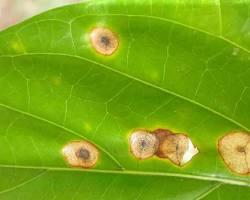
เช–เชพเชฐเซเช‚ เชชเชพเชฃเซ€ เชซเซ‚เช— เช…เชจเซ‡ เชฌเซ‡เช•เซเชŸเซ‡เชฐเชฟเชฏเชฒ เชฐเซ‹เช—เซ‹ เชฎเชพเชŸเซ‡ เชธเช‚เชตเชฐเซเชงเชจ เชญเซ‚เชฎเชฟ เชคเชฐเซ€เช•เซ‡ เช•เชพเชฐเซเชฏ เช•เชฐเซ‡ เช›เซ‡. เชตเชงเซ เชชเชกเชคเชพเช‚ เชฎเซ€เชจเชฐเชฒเซเชธเชจเซเช‚ เชชเซเชฐเชฎเชพเชฃ เช† เชฐเซ‹เช—เซ‹เชจเชพ เช‰เชฆเซเชญเชต เชฎเชพเชŸเซ‡ เชเช• เช†เชฆเชฐเซเชถ เชตเชพเชคเชพเชตเชฐเชฃ เชŠเชญเซเช‚ เช•เชฐเซ‡ เช›เซ‡, เชœเซ‡ เชชเชพเช‚เชฆเชกเชพเชฎเชพเช‚ เชซเซ‹เชฒเซเชฒเซ€เช“ เชคเซ‡เชฎเชœ เชชเซ€เชณเชพ เชกเชพเช˜, เชฎเซ‚เชณเชฎเชพเช‚ เชธเชกเซ‹ เช…เชจเซ‡ เช…เชจเซเชฏ เช›เซ‹เชกเชจเซ€ เชฌเชฟเชฎเชพเชฐเซ€เช“ เชคเชฐเชซ เชฆเซ‹เชฐเซ€ เชœเชพเชฏ เช›เซ‡.

Image of closeup shot of a leaf with visible fungal infections and brown spots

[เชฆเซƒเชถเซเชฏเชฎเชพเชจ เชซเช‚เช—เชฒ เชšเซ‡เชช เช…เชจเซ‡ เชญเซ‚เชฐเชพ เชซเซ‹เชฒเซเชฒเซ€เช“เชตเชพเชณเชพ เชชเชพเช‚เชฆเชกเชพเชจเซ‹ เช•เซเชฒเซ‹เชเช…เชช เชถเซ‹เชŸ]

เชชเชพเชฃเซ€เชจเซ‹ เช‰เชชเชฏเซ‹เช—: 

เช–เชพเชฐเชพ เชชเชพเชฃเซ€เชจเซ‹ เช…เชฐเซเชฅ เช เชจเชฅเซ€ เช•เซ‡ เชคเชฎเซ‡ เช“เช›เชพ เชชเชพเชฃเซ€เชจเซ‹ เช‰เชชเชฏเซ‹เช— เช•เชฐเซ€ เชฐเชนเซเชฏเชพ เช›เซ‹. เชตเชฟเชชเชฐเซ€เชค เชคเชฎเซ‡ เชชเชพเชฃเซ€เชจเซ‹ เช…เชคเชฟเชถเชฏ เชฌเช—เชพเชก เช•เชฐเซ€ เชฐเชนเซเชฏเชพ เช›เซ‹. เช† เชชเชพเชฃเซ€เชจเชพ เชจเชฌเชณเชพ เชถเซ‹เชทเชฃเชจเซ‡ เช•เชพเชฐเชฃเซ‡, เช–เชพเชฐเชพ เชชเชพเชฃเซ€เชจเซ‡ เชฎเซ‚เชณ เชธเซเชงเซ€ เชชเชนเซ‹เช‚เชšเชตเชพ เชฎเชพเชŸเซ‡ เชตเชงเซ เชคเซ‡เชฎเชœ เชตเชพเชฐเช‚เชตเชพเชฐ เชธเชฟเช‚เชšเชพเชˆเชจเซ€ เชœเชฐเซ‚เชฐ เชชเชกเซ‡ เช›เซ‡. เช†เชฅเซ€ เชชเชพเชฃเซ€เชจเซ‹ เชตเชชเชฐเชพเชถ เช…เชจเซ‡ เชตเซเชฏเชฏเชฎเชพเช‚ เชตเชงเชพเชฐเซ‹ เชฅเชพเชฏ เช›เซ‡.

เช•เซเชทเชพเชฐเชจเซ‹ เชœเชฎเชพเชต:

เชนเชพเชฐเซเชก เชตเซ‹เชŸเชฐ เชœเซเชฏเชพเช‚ เชชเชฃ เชตเชนเซ‡ เช›เซ‡ เชคเซเชฏเชพเช‚ เชคเซ‡เชจเซ€ เชชเชพเชคเชณเซ เชธเซเชคเชฐ เชชเชพเช›เชณ เช›เซ‹เชกเซ€ เชฆเซ‡ เช›เซ‡. เชคเชฎเชพเชฐเซ€ เชธเชฟเช‚เชšเชพเชˆ เชชเซเชฐเชฃเชพเชฒเซ€เชฎเชพเช‚, เช† เช–เชจเชฟเชœเซ‹เชจเซ‹ เชœเชฎเชพเชต เช•เชฐเซ‡ เช›เซ‡, เชœเซ‡เชจเซ‡ เชธเซเช•เซ‡เชฒ เชคเชฐเซ€เช•เซ‡ เชชเชฃ เช“เชณเช–เชตเชพเชฎเชพเช‚ เช†เชตเซ‡ เช›เซ‡. เช† เชœเชฎเชพเชต เชชเชพเชˆเชชเซ‹, เชจเซ‹เชเชฒ เช…เชจเซ‡ เชฎเชพเช‡เช•เซเชฐเซ‹ เช‡เชฐเชฟเช—เซ‡เชถเชจ เชชเชฐ เชฎเชพเช เซ€ เช…เชธเชฐ เช•เชฐเซ‡ เช›เซ‡. เชเชŸเชฒเซเช‚ เชœ เชจเชนเชฟ เช† เชฌเซเชฒเซ‰เช•เซ‡เชœ เชชเชพเชฃเซ€เชจเชพ เชชเซเชฐเชตเชพเชนเชจเซ‡ เชฌเช‚เชง เช…เชจเซ‡ เชชเซเชฐเชคเชฟเชฌเช‚เชงเชฟเชค เช•เชฐเซ€ เชถเช•เซ‡ เช›เซ‡, เชคเชฎเชพเชฐเซ€ เชธเชฟเชธเซเชŸเชฎเชจเซ€ เช•เชพเชฐเซเชฏเช•เซเชทเชฎเชคเชพเชจเซ‡ เช˜เชŸเชพเชกเซ€ เชถเช•เซ‡ เช›เซ‡ เช…เชจเซ‡ เชชเชพเชฃเซ€ เชตเชฟเชคเชฐเชฃเชจเซ€ เชเช•เชฐเซ‚เชชเชคเชพเชจเซ‡ เช…เชธเชฐ เช•เชฐเซ€ เชถเช•เซ‡ เช›เซ‡.

เชฎเชถเซ€เชจเชฐเซ€ เชœเชพเชณเชตเชฃเซ€: 

เชนเชพเชฐเซเชก เชตเซ‹เชŸเชฐ เชซเช•เซเชค เชคเชฎเชพเชฐเชพ เชชเชพเช• เชชเชฐ เชœ เชจเชนเซ€เช‚ เชชเชฐเช‚เชคเซ เชคเชฎเชพเชฐเชพ เชฎเซ‹เช‚เช˜เชพ เชธเชพเชงเชจเซ‹ เชชเชฐ เชชเชฃ เชชเชพเชฏเชฎเชพเชฒเซ€ เช•เชฐเซ‡ เช›เซ‡. เช–เชจเชฟเชœเซ‹เชจเซ‹ เชœเชฎเชพเชต เชชเช‚เชช, เชตเชพเชฒเซเชต เช…เชจเซ‡ เชธเซเชชเซเชฐเชฟเช‚เช•เชฒเชฐเชฎเชพเช‚ เชฅเชพเชฏ เช›เซ‡, เชœเซ‡เชจเชพเชฅเซ€ เชœเชพเชณเชตเชฃเซ€ เช–เชฐเซเชš เชตเชงเซ‡ เช…เชจเซ‡ เชœเซ€เชตเชจเช•เชพเชณ เช˜เชŸเซ‡ เช›เซ‡. เชธเชฎเชฏ เชœเชคเชพเช‚, เช–เชจเชฟเชœเซ‹เชจเซ‹ เชœเชฎเชพเชต เชธเชฎเช—เซเชฐ เชธเชฟเช‚เชšเชพเชˆ เชชเซเชฐเชฃเชพเชฒเซ€เชจเซ‡ เชจเซเช•เชธเชพเชจ เชชเชนเซ‹เช‚เชšเชพเชกเซ€ เชถเช•เซ‡ เช›เซ‡, เชœเซ‡เชฎเชพเช‚ เชฎเซ‹เช‚เช˜เชพ เชธเชฎเชพเชฐเช•เชพเชฎ เช…เชฅเชตเชพ เชคเซ‹ เชธเช‚เชชเซ‚เชฐเซเชฃ เชซเซ‡เชฐเชฌเชฆเชฒเชจเซ€ เชœเชฐเซ‚เชฐ เชชเชกเซ‡ เช›เซ‡. 

เช† เชคเซ‹ เช•เซƒเชทเชฟเชฎเชพเช‚ เช–เชพเชฐเชพ เชชเชพเชฃเซ€เชจเซ€ เช•เช เซ‹เชฐ เชตเชพเชธเซเชคเชตเชฟเช•เชคเชพเช“เชจเซ€ เชฎเชพเชคเซเชฐ เชเช• เชเชฒเช• เช›เซ‡. เชชเชฐเช‚เชคเซ เช† เชธเชฎเชธเซเชฏเชพเช“เชจเซ€ เชตเชšเซเชšเซ‡ เชชเชฃ เช†เชถเชพเชจเซ‡ เชธเซเชฅเชพเชจ เช›เซ‡.

เชธเซ‹เชซเซเชŸ เชตเซ‹เชŸเชฐเชจเชพ เช‰เช•เซ‡เชฒ 
เชœเชฎเซ€เชจเชฎเชพเช‚ เชญเซ‡เชœเชจเซเช‚ เชธเซเชคเชฐ:

เชจเชฐเชฎ เชชเชพเชฃเซ€, เชคเซ‡เชจเชพ เชถเซเชฐเซ‡เชทเซเช  เชถเซ‹เชทเชฃ เช…เชจเซ‡ เชธเชฎเชพเชจเชฐเซ‚เชชเซ‡ เชœเชฎเซ€เชจเชฎเชพเช‚ เชญเซ‡เชœเชจเชพ เชตเชฟเชคเชฐเชฃ เชฎเชพเชŸเซ‡ เชฒเชพเชญเชฆเชพเชฏเซ€ เช›เซ‡. เช† เชฐเซ€เชคเซ‡ เชœเชฎเซ€เชจ เช›เชฟเชฆเซเชฐเชพเชณเซ เช…เชจเซ‡ เชชเซ‹เชšเซ€ เชฌเชจเซ‡ เช›เซ‡ เช…เชจเซ‡ เชœเชฎเซ€เชจเชจเซ€ เชญเซ‡เชœเชงเชพเชฐเชฃเชถเช•เซเชคเชฟ เชตเชงเซ‡ เช›เซ‡. เชชเชฐเชฟเชฃเชพเชฎเซ‡ เชจเชฐเชฎ เชชเชพเชฃเซ€ เชคเชฎเชพเชฐเชพ เช›เซ‹เชก เชฎเชพเชŸเซ‡ เชนเชพเช‡เชกเซเชฐเซ‡เชŸเซ‡เชก เชธเซเชตเชฐเซเช— เชŠเชญเซเช‚ เช•เชฐเซ‡ เช›เซ‡; เชœเซ‡เชฅเซ€ เชฌเซ‡ เชธเซ€เช‚เชšเชœเช เชตเชšเซเชšเซ‡เชฃเซ‹ เช…เช‚เชคเชฐเชพเชณ เชตเชงเซ‡ เช›เซ‡. 

เชฎเชพเชŸเซ€เชจเซเช‚ เชฌเช‚เชงเชพเชฐเชฃ: 

เชจเชฐเชฎ เชชเชพเชฃเซ€, เชคเซ‡เชจเชพ เชธเซŒเชฎเซเชฏ เชธเซเชชเชฐเซเชถเชฅเซ€, เชฎเชพเชŸเซ€เชจเชพ เชขเซ‡เชซเชพเช‚เชจเซ‡ เชœเชฐเซเชœเชฐเชฟเชค เชฌเชจเชพเชตเซ€ เชคเซ‹เชกเซ‡ เช›เซ‡. เช† เชฐเซ€เชคเซ‡ เชœเชฎเซ€เชจเชจเซ‡ เชถเซเชตเชพเชธ เชฒเซ‡เชตเชพเชจเซ€ เช…เชจเซ‡ เช–เซ€เชฒเชตเชพเชจเซ€ เชฎเซ‹เช•เชณเชพเชถ เชฎเชณเซ‡ เช›เซ‡. เช…เช‚เชคเซ‡ เชœเชฎเซ€เชจเชจเซเช‚ เชงเซ‹เชตเชพเชฃ เชฅเชคเซเช‚ เช…เชŸเช•เซ‡ เช›เซ‡. 

เช›เซ‹เชกเชจเชพ เชฎเชœเชฌเซ‚เชค เชฎเซ‚เชณ:

เชฎเซ‚เชณ เชคเชฎเชพเชฐเชพ เช›เซ‹เชกเชจเชพ เชเชจเซเช•เชฐ เชคเชฐเซ€เช•เซ‡ เช•เชพเชฎ เช•เชฐเซ‡ เช›เซ‡. เชธเซ‹เชซเซเชŸ เชตเซ‹เชŸเชฐ, เชชเซ‹เชทเช• เชคเชคเซเชตเซ‹เชจเชพ เชถเซ‹เชทเชฃ เช…เชจเซ‡ เชฎเชพเชŸเซ€เชจเชพ เชธเซเชตเชพเชธเซเชฅเซเชฏเชจเซ‡ เชชเซเชฐเซ‹เชคเซเชธเชพเชนเชจ เชชเซ‚เชฐเซเช‚ เชชเชพเชกเซ‡ เช›เซ‡. เช† เชฎเชœเชฌเซ‚เชค, เชธเซเชฅเชฟเชคเชฟเชธเซเชฅเชพเชชเช• เชฎเซ‚เชณ เชคเช‚เชคเซเชฐ เช•เซ‹เชˆเชชเชฃ เชชเชกเช•เชพเชฐ เชธเชพเชฎเซ‡ เช…เชกเช— เชฐเชนเซ‡ เช›เซ‡.

เชธเชฟเช‚เชšเชพเชˆ เชชเซเชฐเชฃเชพเชฒเซ€เชฎเชพเช‚ เชธเซเชตเชšเซเช›เชคเชพ:

เชถเซเชฆเซเชงเชฟเช•เชฐเชฃเชจเซ€ เชœเซ‡เชฎ เชจเชฐเชฎ เชชเชพเชฃเซ€, เชœเซ€เชตเชจ เช†เชชเชจเชพเชฐ เชคเชฅเชพ เชชเชพเชฃเซ€เชจเชพ เชธเชฐเชณ เชชเซเชฐเชตเชพเชนเชจเซ‡ เชœเชพเชณเชตเซ€ เชฐเชพเช–เชจเชพเชฐ เชธเชพเชฌเชฟเชค เชฅเชฏเซเช‚ เช›เซ‡. เชจเชฐเชฎ เชชเชพเชฃเซ€ เชธเชฟเช‚เชšเชพเชˆเชจเซ‡ เช…เช‚เชฆเชฐเชฅเซ€ เชšเซ‹เช–เซเช–เซ€ เชฐเชพเช–เซ‡ เช›เซ‡. เช•เชฒเซเชชเชจเชพ เช•เชฐเซ‹ เช•เซ‡ เชคเชฎเชพเชฐเซ€ เชธเชฟเช‚เชšเชพเชˆ เชชเซเชฐเชฃเชพเชฒเซ€ เชฆเซ‹เชทเชฐเชนเชฟเชค เชฐเซ€เชคเซ‡ เช•เชพเชฐเซเชฏ เช•เชฐเซ€ เชฐเชนเซ€ เช›เซ‡, เช…เชจเซ‡  เชฆเชฐเซ‡เช• เชคเชฐเชธเซเชฏเชพ เช›เซ‹เชกเชจเซ‡ เชธเชฎเชพเชจ เชคเชฅเชพ เช•เชพเชฐเซเชฏเช•เซเชทเชฎ เชฐเซ€เชคเซ‡ เช•เชฟเช‚เชฎเชคเซ€ เชชเชพเชฃเซ€ เชชเชนเซ‹เช‚เชšเชพเชกเซ‡ เช›เซ‡.

เชนเชฐเชฟเชฏเชพเชณเซเช‚ เชตเชพเชตเซ‡เชคเชฐ:

เชจเชฐเชฎ เชชเชพเชฃเซ€, เชคเซ‡เชจเชพ เชธเซŒเชฎเซเชฏ เชธเซเชชเชฐเซเชถเชฅเซ€ เช›เซ‹เชกเชจเชพ เชชเชพเช‚เชฆเชกเชพ เชชเซ€เชณเชพ เชชเชกเชคเชพเช‚ เช…เชŸเช•เชพเชตเซ‡ เช›เซ‡ เช…เชจเซ‡ เช›เซ‹เชกเชจเซ‡ เชจเชตเซเช‚ เชœเซ€เชตเชจเชฆเชพเชจ เช†เชชเซ‡ เช›เซ‡. เชคเชฎเชพเชฐเชพ เช–เซ‡เชคเชฐเชฎเชพเช‚ เชจเซ€เชฒเชฎเชฃเชฟ เช˜เชพเชธเชจเชพ เชฎเซ‡เชฆเชพเชจเซ‹, เชธเชฎเซƒเชฆเซเชง เช–เซ‡เชคเชฐเซ‹ เช…เชจเซ‡ เชฒเซ€เชฒเชพเช›เชฎ เชชเชพเช•เชจเซเช‚ เชšเชฟเชคเซเชฐเชฃ เชŠเชญเซเช‚ เช•เชฐเซ‡ เช›เซ‡.

เชฎเชพเช‡เช•เซเชฐเซ‹ เช‡เชฐเชฟเช—เซ‡เชถเชจเชจเซ€ เช•เชพเชฐเซเชฏเช•เซเชทเชฎเชคเชพ เช…เชจเซ‡ เช†เชฏเซเชทเซเชฏ:

เชธเซ‹เชซเซเชŸ เชตเซ‹เชŸเชฐ เช•เซเชทเชพเชฐ เชœเชฎเชพเชต เช…เชจเซ‡ เชฒเชพเช—เชคเชพ เช•เชพเชŸเชจเซ‡ เช…เชŸเช•เชพเชตเซ€เชจเซ‡, เชธเชฟเช‚เชšเชพเช‡เชคเช‚เชคเซเชฐเชจเซ€ เช•เชพเชฐเซเชฏเช•เซเชทเชฎเชคเชพเชจเซ‡ เชฎเชนเชคเซเชคเชฎ เช•เชฐเซ‡ เช›เซ‡ เช…เชจเซ‡ เชคเชฎเชพเชฐเชพ เชฎเซ‚เชฒเซเชฏเชตเชพเชจ เชธเชพเชงเชจเซ‹เชจเชพ เชœเซ€เชตเชจเช•เชพเชณเชจเซ‡ เชฒเช‚เชฌเชพเชตเซ‡ เช›เซ‡.

เช† เชซเช•เซเชค เชคเชฎเชพเชฐเชพ เช–เซ‡เชคเชฐเชฎเชพเช‚ เชจเชฐเชฎ เชชเชพเชฃเซ€เชจเซ€ เช…เชœเชพเชฏเชฌเซ€เช“เชจเซ€ เชเช• เชเชฒเช• เช›เซ‡. เชฏเชพเชฆ เชฐเชพเช–เซ‹, เช–เชพเชฐเซเช‚ เชชเชพเชฃเซ€ เช เชคเชฎเชพเชฐเซเช‚ เชญเชพเช—เซเชฏ เชจเชฅเซ€;เช เชเช• เชชเชกเช•เชพเชฐ เช›เซ‡!

เช‡-เชธเซ‹เชซเซเชŸ เชตเซ‹เชŸเชฐ เชธเซ‹เชซเซเชŸเชจเชฐ: เชชเชพเช•เชจเซ‹ เชฐเช•เซเชทเช•ย 
เช“เช›เชพ เช–เชจเชฟเชœเชจเซเช‚ เชคเซ‡เชฎเชœ เช•เซเชทเชพเชฐเชจเซเช‚ เชจเชฟเชฐเซเชฎเชพเชฃ:

เช‡-เชธเซ‹เชซเซเชŸ เชตเซ‹เชŸเชฐ เชธเซ‹เชซเซเชŸเชจเชฐ เชฐเชฃเชญเซ‚เชฎเชฟเชฎเชพเช‚ เชšเชฎเช•เชคเชพ เช˜เซ‹เชกเชพเชจเซ€ เชœเซ‡เชฎ เช•เชพเชฎ เช•เชฐเซ‡ เช›เซ‡. เชฎเชฟเชจเชฐเชฒ เชœเชฎเชพเชตเชจเชพ เชคเซเชฐเชพเชธ เชชเชฐ เชตเชฟเชœเชฏ เชฎเซ‡เชณเชตเซ‡ เช›เซ‡. เช† เชตเซ‰เชŸเชฐ เชธเซ‹เชซเซเชŸเชจเชฐ เช•เชšเชฐเซ‹ เชญเชฐเชพเชฏเซ‡เชฒเซ€ เชธเชฟเช‚เชšเชพเชˆ เชชเซเชฐเชฃเชพเชฒเซ€เช“เชจเซ‡ เชตเชฟเชฆเชพเชฏ เช†เชชเซ€, เชธเชฐเชณ เช…เชจเซ‡ เช•เชพเชฐเซเชฏเช•เซเชทเชฎ เชชเชพเชฃเซ€เชจเชพ เชชเซเชฐเชตเชพเชนเชจเซ‡ เช†เชตเช•เชพเชฐเซ‡ เช›เซ‡ เชœเซ‡ เชคเชฎเชพเชฐเซ€ เชœเชฎเซ€เชจเชจเชพ เชฆเชฐเซ‡เช• เช–เซ‚เชฃเชพเชจเซ‡ เชธเชฎเชพเชจ เชชเซ‹เชทเช•เชคเชคเซเชตเซ‹ เชชเซ‚เชฐเชพ เชชเชพเชกเซ‡ เช›เซ‡.

เชธเซเชงเชพเชฐเซ‡เชฒ เชชเซ‹เชทเช• เชคเชคเซเชคเซเชตเซ‹เชจเซ‹ เช‰เชชเชฆเซเชฐเชต:ย 

เช‡-เชธเซ‹เชซเซเชŸ เชตเซ‹เชŸเชฐ เชธเซ‹เชซเซเชŸเชจเชฐ เชคเชฎเชพเชฐเชพ เชชเชพเช• เชฎเชพเชŸเซ‡ เชชเซ‹เชทเช• เชคเชคเซเชตเซ‹เชจเชพ เชฆเชฐเชตเชพเชœเชพ เช–เซเชฒเซเชฒเชพ เชฎเซ‚เช•เซ‡ เช›เซ‡. เช–เชจเชฟเชœ เช…เชตเชฐเซ‹เชงเซ‹เชจเซ‡ เชฆเซ‚เชฐ เช•เชฐเซ€เชจเซ‡, เชคเซ‡ เช–เชพเชคเชฐเซ€ เช•เชฐเซ‡ เช›เซ‡ เช•เซ‡ เช†เชตเชถเซเชฏเช• เชชเซ‹เชทเช• เชคเชคเซเชคเซเชตเซ‹ เชคเซ‡เชฎเชจเชพ เชฎเซ‚เชณ เชธเซเชงเซ€ เชชเชนเซ‹เช‚เชšเซ‡. เช† เชฐเซ€เชคเซ‡ เชŠเชชเชœเชจเซ‡ เช†เชคเซเชฏเช‚เชคเชฟเช• เชตเซƒเชฆเซเชงเชฟ เช…เชจเซ‡ เชธเซเชตเชพเชธเซเชฅเซเชฏ เชชเซเชฐเชพเชชเซเชค เชฅเชพเชฏ เช›เซ‡.

เช–เชพเชฐเชพเชถ เช…เชจเซ‡ เช›เซ‹เชกเชจเชพ เชจเซเช•เชธเชพเชจเชฎเชพเช‚ เช˜เชŸเชพเชกเซ‹:ย 

เชนเชพเชฐเซเชก เชตเซ‰เชŸเชฐเชจเชพ เช–เชพเชฐเชพ เช•เซ‹เชช เชธเชพเชฎเซ‡ เช‡-เชธเซ‹เชซเซเชŸ เชธเซเชฐเช•เซเชทเชพเช•เชตเชš เช›เซ‡. เชคเซ‡ เช•เซเชทเชพเชฐเซ€เชฏ เชธเซเชคเชฐเชจเซ‡ เช•เชพเชฌเซ‚เชฎเชพเช‚ เชฐเชพเช–เซ‡ เช›เซ‡ เช…เชจเซ‡ เชคเชฎเชพเชฐเชพ เช›เซ‹เชกเชจเซ‡ เชจเชฟเชฐเซเชœเชฒเซ€เช•เชฐเชฃ เช…เชจเซ‡ เชจเซเช•เชธเชพเชจเชฅเซ€ เชฌเชšเชพเชตเซ‡ เช›เซ‡. เชˆ-เชธเซ‹เชซเซเชŸ เช–เชพเชคเชฐเซ€ เช•เชฐเซ‡ เช›เซ‡ เช•เซ‡ เชคเชฎเชพเชฐเชพ เช–เซ‡เชคเชฐเซ‹ เชซเช•เซเชค เชœเซ€เชตเชจ เชธเชพเชฅเซ‡ เชœ เชจเชนเซ€เช‚, เชชเชฐเช‚เชคเซ เช—เซเชฃเชตเชคเซเชคเชพ เชธเชพเชฅเซ‡ เช–เซ€เชฒเซ‡!

phเชฎเชพเช‚ เช‰เชคเชพเชฐ-เชšเชขเชพเชต:ย 

เช‡-เชธเซ‹เชซเซเชŸ เชธเซเชฅเชฟเชฐ ph เชธเช‚เชคเซเชฒเชจ เชœเชพเชณเชตเซ‡ เช›เซ‡. เช† เชจเชพเชœเซเช• เชธเช‚เชคเซเชฒเชจ เชคเชฎเชพเชฐเซ€ เชฎเชพเชŸเซ€เชจเซ‡ เชซเชณเชฆเซเชฐเซเชช เช…เชจเซ‡ เชคเช‚เชฆเซเชฐเชธเซเชค เชฐเชพเช–เซ‡ เช›เซ‡. เชนเชตเซ‡ เช•เซ‹เชˆ เช…เชจเชฟเชฏเชฎเชฟเชค ph เชจเชฅเซ€ เชœเซ‡ เชคเชฎเชพเชฐเชพ เชชเชพเช• เชชเชฐ เชญเชพเชฐ เชฎเซ‚เช•เซ€ เชถเช•เซ‡. 

เช‰เชจเซเชจเชค เชชเชพเช•เชจเซ€ เช—เซเชฃเชตเชคเซเชคเชพ:ย 

เช‡-เชธเซ‹เชซเซเชŸ เชตเซ‹เชŸเชฐ เชธเซ‹เชซเซเชŸเชจเชฐ เชธเชพเชฅเซ‡, เชคเชฎเชพเชฐเซ€ เช–เซ‡เชคเซ€ เชชเชฐเชฟเชตเชฐเซเชคเชจเชฎเชพเช‚เชฅเซ€ เชชเชธเชพเชฐ เชฅเชพเชฏ เช›เซ‡. เชฌเซ€เชœ เชฐเซ‹เชชเชฃเชฅเซ€ เชฎเชพเช‚เชกเซ€เชจเซ‡ เชฒเชฃเชฃเซ€ เชธเซเชงเซ€ เชชเชพเช• เชฎเชพเชŸเซ‡ เชœเชฐเซ‚เชฐเซ€ เชชเซ‹เชทเช•เชคเชคเซเชตเซ‹ เชชเซ‚เชฐเชพ เชชเชพเชกเซ‡ เช›เซ‡. เชซเชณเซ‹ เช…เชจเซ‡ เชถเชพเช•เชญเชพเชœเซ€ เชคเซ‡เชฎเชจเซ€ เชธเช‚เชชเซ‚เชฐเซเชฃ เช•เซเชทเชฎเชคเชพเซ‡ เช–เซ€เชฒเซ‡ เช›เซ‡; เชœเซ‡เชฅเซ€ เชคเชฎเชพเชฐเชพ เช—เซเชฐเชพเชนเช•เซ‹เชจเซ‡ย  เชธเซเชตเชพเชฆ เช…เชจเซ‡ เชธเซเชตเชพเชธเซเชฅเซเชฏ เชฌเช‚เชจเซ‡ เชฎเชณเซ€ เชฐเชนเซ‡.ย 

เช–เชพเชคเชฐ เชชเชฐ เชฌเชšเชค:ย 

เช‡-เชธเซ‹เชซเซเชŸ เชตเซ‹เชŸเชฐ เชธเซ‹เชซเซเชŸเชจเชฐ เชซเช•เซเชค เชคเชฎเชพเชฐเชพ เชชเชพเช•เชจเซ‡ เชชเซ‹เชทเชฃ เช†เชชเชคเซเช‚ เชจเชฅเซ€; เชคเซ‡ เชคเชฎเชพเชฐเซ€ เชธเชฎเซƒเชงเซเชงเชฟเชจเซ‡ เชชเชฃ เชชเซ‹เชทเชฃ เช†เชชเซ‡ เช›เซ‡. เชชเซ‹เชทเช• เชคเชคเซเชคเซเชตเซ‹เชจเซ‹ เชตเชชเชฐเชพเชถ เชตเชงเชพเชฐเซ€เชจเซ‡ เช…เชจเซ‡ เชฎเชพเชŸเซ€เชจเชพ เชธเซเชตเชพเชธเซเชฅเซเชฏเชจเซ‡ เชธเซเชงเชพเชฐเซ€เชจเซ‡, เชคเซ‡ เชฎเซ‹เช‚เช˜เชพ เช–เชพเชคเชฐเซ‹ เชคเซ‡เชฎเชœ เชœเช‚เชคเซเชจเชพเชถเช•เซ‹เชจเซ€ เชœเชฐเซ‚เชฐเชฟเชฏเชพเชค เช˜เชŸเชพเชกเซ‡ เช›เซ‡. เชˆ-เชธเซ‹เชซเซเชŸ เช‰เชฎเชฆเชพ เชจเชซเชพ เชธเชพเชฅเซ‡ เชคเชฎเชพเชฐเซ€ เช–เซ‡เชคเซ€เชจเซเช‚ เชญเชตเชฟเชทเซเชฏ เชฐเชšเซ‡ เช›เซ‡.ย 

เชธเชพเชฐเชพเช‚เชถ

เช‡-เชธเซ‹เชซเซเชŸ เชตเซ‹เชŸเชฐ เชธเซ‹เชซเซเชŸเชจเชฐ: เชธเซ‹เชซเซเชŸ เชตเซ‹เชŸเชฐ เชšเซ‡เชฎเซเชชเชฟเชฏเชจ, เชนเชพเชฐเซเชก เชตเซ‹เชŸเชฐ เชธเชพเชฎเซ‡ เชฒเชกเชตเชพ เชฎเชพเชŸเซ‡ เชคเซˆเชฏเชพเชฐ เช›เซ‡. เช† เชเช• เชถเชธเซเชคเซเชฐ เช›เซ‡ เชœเซ‡ เชคเชฎเชจเซ‡ เช–เชพเชฐเชพ เชชเชพเชฃเซ€ เชชเชฐ เชตเชฟเชœเชฏ เชฎเซ‡เชณเชตเชตเชพ เช…เชจเซ‡ เชคเชฎเชพเชฐเซ€ เชœเชฎเซ€เชจเชจเซ€ เช‰เชคเซเชชเชพเชฆเชจ เช•เซเชทเชฎเชคเชพเชจเซ‡ เชตเชงเชพเชฐเซ‡ เช›เซ‡. เชกเซ€เชœเซ€เช—เซ‹ เชตเซ‡เชฌเชธเชพเช‡เชŸเชจเซ€ เชฎเซเชฒเชพเช•เชพเชค เชฒเซ‹ https://digigostore.com เช…เชจเซ‡ เชœเชพเชฃเซ‹ เช•เซ‡ เชเช• เชจเชฟเชฐเซเชฃเชฏ เชคเชฎเชพเชฐเชพ เช–เซ‡เชคเชฐเชจเซ‡ เช•เชพเชฏเชฎ เชฎเชพเชŸเซ‡ เช•เซ‡เชตเซ€ เชฐเซ€เชคเซ‡ เชฌเชฆเชฒเซ€ เชถเช•เซ‡ เช›เซ‡.เช†เชœเซ‡ เชœ เชˆ-เชธเซ‹เชซเซเชŸ เชตเซ‹เชŸเชฐ เชธเซ‹เชซเซเชŸเชจเชฐ เช…เชชเชจเชพเชตเซ‹ เช…เชจเซ‡ เชคเชฎเชพเชฐเชพ เช–เซ‡เชคเชฐเชจเซ‹ เชธเชฎเซƒเชงเซเชง เช‡เชคเชฟเชนเชพเชธ เชฒเช–เซ‹.ย 

เชฏเชพเชฆ เชฐเชพเช–เซ‹, เชธเชฎเซƒเชฆเซเชง เชญเชตเชฟเชทเซเชฏเชจเชพ เชฌเซ€เชœ เชชเชนเซ‡เชฒเซ‡เชฅเซ€ เชœ เชตเชพเชตเชตเชพเชฎเชพเช‚ เช†เชตเซเชฏเชพ เช›เซ‡. เชคเซ‡เชฎเชจเซ‡ เช–เซ‡เชคเชฐเชฎเชพเช‚ เชฒเชนเซ‡เชฐเชพเชคเชพ เชœเซ‹เชตเชพ เชฎเชพเชŸเซ‡ เชคเชฎเชพเชฐเซ‡ เชซเช•เซเชค เชฏเซ‹เช—เซเชฏ เชชเชพเชฃเซ€เชจเซ€ เชœเชฐเซ‚เชฐ เช›เซ‡.

E-Soft Water Softener for Agriculture Rediscover Ancient Farming!

E-Soft Water Softener for Agriculture: Rediscover Ancient Farming!

In this blog, We explain everything about E-Soft Water Softener for Agriculture and Why today’s farming need Water Softener. We also explain how ancient farming was good due to good water and why Today’s Hard Water is bad for Agriculture.

Ancient Farming:

Thirty to forty years ago, They don’t used soft water by Agriculture Water Softener but they used to use the water that was found in the upper layers of the ground through ponds and wells. This water was naturally soft because it was rainwater. It also contained minerals, but these minerals came from the ground through dissolution, so the mineral particles were as small as 0.5 microns.

Farming requires four main elements: 1) Oxygen 2) Nitrogen 3) Calcium 4) Magnesium. Calcium and magnesium are obtained from water, while oxygen and nitrogen are obtained from the air. The function of oxygen and nitrogen is to increase the production of bacteria and provide nutrition. These bacteria absorb micro-nutrients from the soil and transport them to the roots. Previously, the size of calcium and magnesium was small, so they were easily absorbed into the roots and the roots remained strong. Therefore, it was possible to farm with only water. That is why water was used as fertilizer.

Change in Situation:

The main reason for the change in the situation is slowly but surely the increased population and the increasing water demand. To meet this demand, groundwater is being drawn from deeper levels. As a result, the size of these mineral particles has now become 1-2 microns. We call such hard water with hard minerals. These large-sized minerals stick to the upper layer of the soil and block the surface of land. As a result, the flow of oxygen and nitrogen stopped and the nutrition that should have come through water is no longer available.

The impact of this change is that plants are not getting the nutrients they need. As a result, their roots become weak and they are unable to absorb water and nutrients properly. This leads to reduced crop yields and increased crop damage.

To address this issue, farmers are using chemical fertilizers to provide the nutrients that their crops need. However, this is not a sustainable solution. Chemical fertilizers can pollute the environment and harm human health

Research on Hard Water:

Scientists have researched that if calcium magnesium stones are rubbed and ground to 0.5 microns and given to the roots; then these particles break down with water and are easily absorbed into the roots. By doing this, the roots became strong, but these stones naturally mixed with particles of heavy metals such as arsenic and lead. This caused the lower layer of the soil to also be blocked. In this way, the soil stopped getting nutrients from both sides. Due to this, the roots that used to grow deep and strong earlier instead become horizontal and thin. Weak roots led to weak plants. Along with this, it needs more artificial fertilizers and increased crop damage.

One study found that plants grown with hard water had smaller root systems than plants grown with soft water. This is because the hard water minerals can block the pores of the surface making it difficult for roots to absorb water and nutrients.

Another study found that plants grown with hard water were more susceptible to diseases. This is because the hard water minerals can weaken the plant’s immune system, making it more vulnerable to infection.

Need for Soft Water:

Now, to get out of this situation, we need to work on the cause of the problem. The quality of water has changed due to the water level going deeper and agriculture has become weak. Now, to strengthen agriculture, this hard water needs to be softened so that it contains small-sized minerals and plants do not have any difficulty in absorbing them.

The need for soft water in agriculture is clear. Soft water is easier for plants to absorb, which can lead to increased crop yields and reduced crop damage.

E-Soft Water Softener for Agriculture Technology:

To change the water back to what it used to be, we have created a device. Its scientific name is Electro Hydro Enhancer, which is E-Soft.

How E-Soft Water Softener Works?

How E-Soft Water Softener for Agriculture for Works
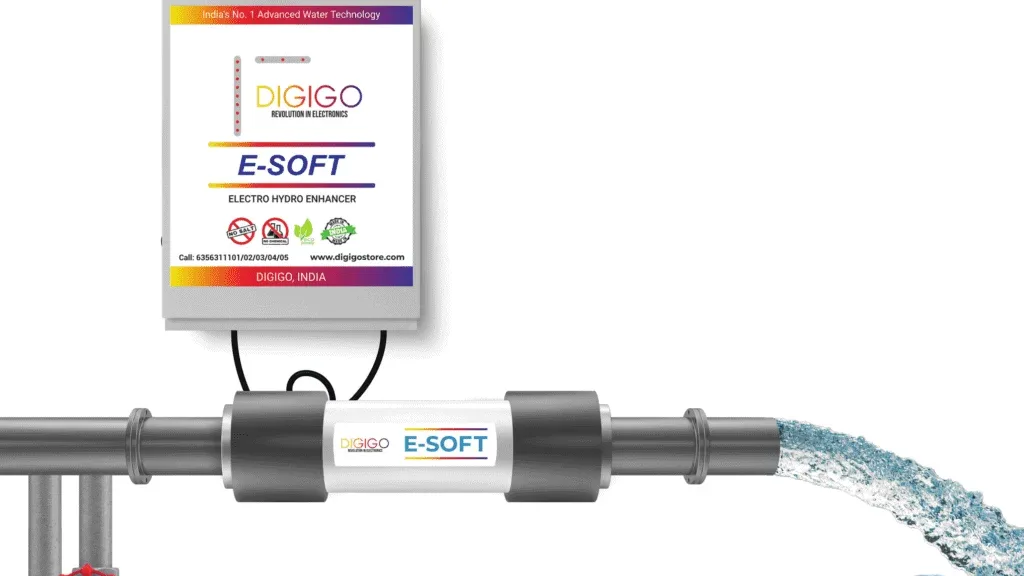
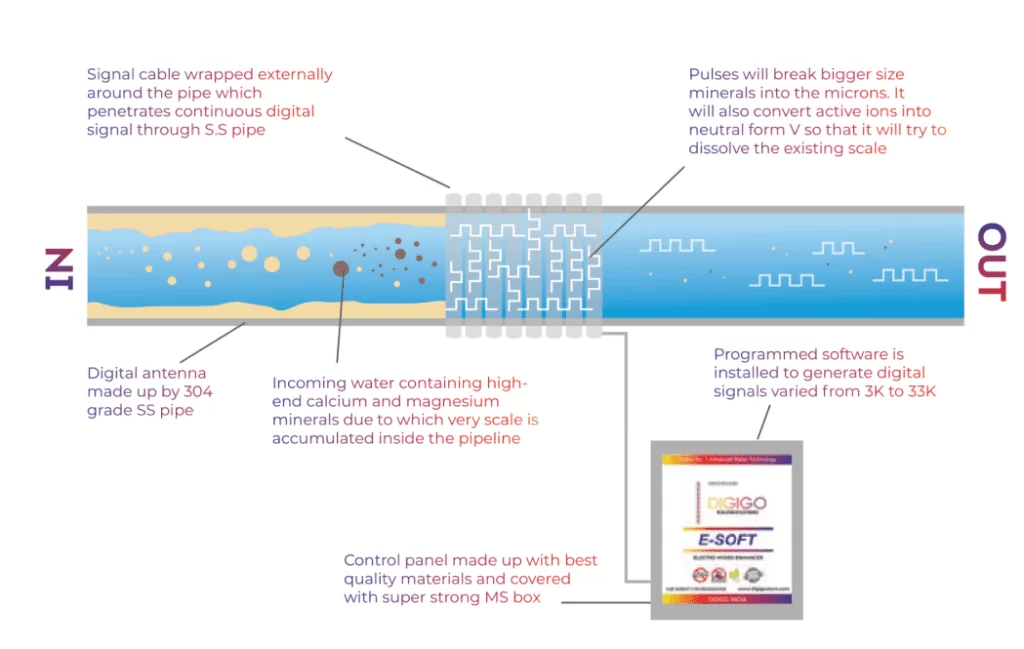
  • The E-Soft Water Softener for Agriculture device has two main components: 1) a digital antenna and 2) a control panel.
  • The digital antenna is connected to the control panel by a cable.
  • The control panel generates low-frequency electronic pulses.
  • These electronic pulses pass through the digital antenna.
  • The low-frequency electronic pulses interact with the water molecules, causing the hard minerals to break down into smaller particles.
  • These smaller particles are then easily absorbed by plants.

Transformation E-Soft Hard Water Softener Brings:

Using soft water makes the soil porous; because small minerals do not block the surface. The same minerals that were a nuisance are now converted into fertilizer. The roots can easily absorb this water so that the plant will be strong.

Due to the availability of nutrients such as calcium, magnesium, oxygen, and nitrogen to the crop, the plant reduces the need for chemical fertilizers. Hence E-Soft Agriculture Water Softener System protects the environment. Therefore, it becomes possible to farm only with water as in ancient agriculture.

E-Soft water softening technology has some advantages over traditional water-softening methods.

  • It breaks the minerals within the water; with no water wastage.
  • More efficient in terms of energy consumption.
  • Less expensive to install and maintain.

Conclusion:

Overall, E-Soft Agriculture Water Softener has the potential to revolutionize the way we farm. It could help to improve crop yields, reduce crop damage, and protect the environment. Join the farmers who are revolutionizing agriculture with E-Soft Water Softener.