
Sunday morning in many homes follows a familiar routine.
Floors get mopped, kitchen counters are wiped, and bathroom taps are scrubbed until they shine again. But by the next week, the same white marks quietly return on the faucet, showerhead, and tiles.
Most people assume it is just normal dust or soap residue.
In reality, those faint chalky deposits are often the visible trace of hard water minerals. The same calcium and magnesium leaving marks on bathroom fixtures are also travelling through pipelines, water heaters, washing machines, and storage tanks.
Over time, those minerals settle inside infrastructure, slowly forming scale layers that affect how water systems operate.
This is why discussions around hard water softener solutions are no longer limited to large facilities. Even everyday household water systems are now being evaluated for how mineral behavior impacts long-term plumbing performance.
Contents
What is a Water Softener
A water softener is a system designed to address the operational problems caused by hard water minerals. Hardness typically comes from dissolved calcium and magnesium present in groundwater sources.
When water flows through pipelines or gets heated, these minerals tend to crystallize and stick to surfaces. The result is scale formation inside pipes, heaters, pumps, irrigation lines, and industrial equipment.
A water softener system works by reducing the impact of these minerals. Different technologies approach this challenge in different ways.
Traditional ion-exchange softeners
These systems remove calcium and magnesium ions from water and replace them with sodium ions. The process uses resin beads and requires periodic regeneration using salt.
Operationally, this approach involves:
- Resin tanks where mineral exchange occurs
- Salt storage for regeneration cycles
- Wastewater discharge during cleaning cycles
- Regular monitoring and replenishment
Ion exchange systems are widely used in environments where mineral removal is required for specific process conditions.
Electronic water softening systems
Electronic systems take a different approach. Instead of removing minerals, they influence how minerals behave in flowing water.
In general terms, these systems:
- Use electronic impulses or digital signals around the pipeline
- Alter mineral crystallization behaviour
- Break larger mineral clusters into micro-scale particles
- Keep calcium and magnesium suspended in the water flow
- Reduce the tendency of minerals to stick to surfaces
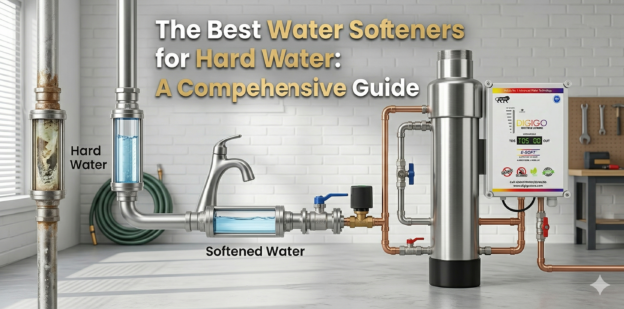
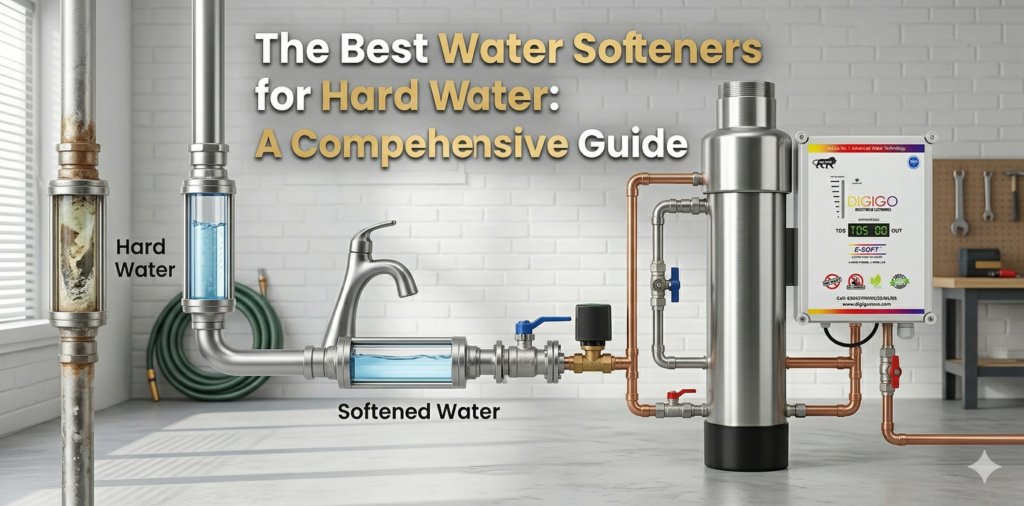
For example, systems like the DIGIGO E-SOFT water solution operate on this principle. They work on the pipe exterior and influence water behaviour without salt, chemical regeneration, or resin tanks.
The minerals remain present in the water, but their ability to form stubborn deposits reduces.
This distinction is important because hard water management is often about controlling scale formation rather than eliminating minerals entirely.
Benefits of Water Softener
Understanding the benefits of water softener technologies requires looking beyond household comfort. Hard water affects entire water flow systems. When scale builds up, the impact spreads across plumbing, heating, irrigation, and industrial operations.
Some of the most visible system effects include the following.
1. Reduced scale formation in pipelines and equipment
Mineral deposits slowly narrow pipe diameter and create rough internal surfaces. Over time this affects water flow and pressure stability.
When mineral behaviour is managed properly, deposits form more slowly. Maintenance cycles become less frequent and plumbing infrastructure remains stable for longer periods.
2. Improved energy efficiency in heating systems
Scale is a poor conductor of heat. Even a thin mineral layer on a heating surface can significantly reduce heat transfer efficiency.
As scale thickens, heaters, boilers, and geysers require more energy to achieve the same output. In residential and industrial environments alike, energy loss is often linked to mineral buildup rather than mechanical failure.
Managing scale formation helps maintain heat transfer efficiency.
3. Lower maintenance burden
Hard water scaling is a common reason for repeated repairs. Pump seals wear faster. Valves stick. Irrigation nozzles clog. Washing equipment accumulates deposits.
Reducing mineral adherence inside flow systems decreases cleaning and repair frequency.
This is one of the practical reasons why water softener is required in many groundwater-dependent environments.
4. Stable water flow in irrigation systems
Agricultural infrastructure is especially sensitive to mineral deposits. Drip irrigation systems rely on small emitters that can easily clog.
When minerals remain suspended rather than forming deposits, irrigation lines operate more consistently and require fewer flush cycles.
5. More efficient detergent performance
Hard water minerals interact with soap and detergents, reducing their cleaning efficiency. This is why households and commercial laundries often use higher detergent quantities in hard water areas.
Water behaviour control can reduce this interaction, allowing detergents to function more effectively.
Taken together, these operational improvements explain why many sectors look for a hard water softener solution rather than treating scale as an unavoidable maintenance cost.
How to Choose the Best Water Softener Solution in India
Selecting the best water softener solution in India requires understanding the environment where the system will operate. Water characteristics, infrastructure design, and operational priorities vary significantly across locations.
Instead of focusing only on product features, decision-makers often evaluate several system-level considerations.
1. Water source and hardness profile
The first step is identifying where the water comes from.
Groundwater drawn from borewells often carries higher mineral loads compared to surface water sources. Hardness levels can vary depending on the aquifer structure in a region.
A water test helps determine whether hardness management is necessary and which type of approach might be suitable.
2. Infrastructure scale
Different environments require different system capacities.
For example:
- Homes may need protection for plumbing lines and heaters
- Residential societies may need centralized pipeline treatment
- Farms may need irrigation flow protection
- Industrial plants may require process-specific treatment systems
A solution should integrate smoothly with existing plumbing or pipeline layouts.
3. Maintenance expectations
Some water treatment technologies require regular manual intervention.
Traditional ion-exchange systems typically involve:
- Salt refilling
- Resin regeneration cycles
- Wastewater discharge handling
Electronic systems generally operate without salt or chemical regeneration. For locations where maintenance resources are limited, this operational simplicity can influence system choice.
4. Installation practicality
In many buildings, water treatment systems must be installed within tight utility areas.
Pipeline-mounted technologies often simplify installation because they work externally without altering water flow lines.
Installation feasibility should always be evaluated before selecting a system.
5. Long-term operational cost
Upfront equipment cost is only part of the picture.
Operational considerations such as salt consumption, water wastage, electricity usage, and maintenance labor all influence the long-term cost structure.
This is why facility managers often compare lifecycle impact rather than focusing solely on initial purchase price.
When these factors are examined together, decision-makers can identify the best hard water softener solution suited to their infrastructure environment.
Also read:
Comparison: DIGIGO Hard Water Softeners vs Other Hard Water Softeners
Frequently Asked Questions (FAQs)
1. Why is hard water common in many parts of India?
Many regions rely heavily on groundwater from borewells. As water travels through mineral-rich rock layers underground, it dissolves calcium and magnesium. These minerals contribute to hardness.
2. Do water softeners remove hardness completely?
It depends on the technology used. Ion exchange systems remove calcium and magnesium ions from water. Electronic systems usually modify mineral behavior to reduce scale formation rather than removing the minerals.
3. Where are water softeners typically installed?
They are commonly installed in residential plumbing systems, agricultural irrigation pipelines, commercial buildings, and industrial water flow systems where scale formation affects operations.
4. Does a water softener change drinking water quality?
Most scale-management technologies focus on infrastructure protection rather than drinking water purification. Drinking water treatment often requires separate filtration systems depending on water quality.
5. How quickly can scale reduction be noticed?
Existing scale deposits may take time to loosen or dissolve depending on system conditions. Behavioral changes in mineral deposition patterns typically become visible gradually during regular water usage.
Closing Take
Hard water is often treated as a household inconvenience. In reality, it is a system-level challenge connected to groundwater dependence and mineral-rich aquifers.
Scale formation affects pipelines, heaters, irrigation systems, and industrial equipment. The result is reduced efficiency, higher maintenance, and increased operational cost.
A well-chosen water softener system helps address this challenge by managing mineral behavior in flowing water. Whether through mineral removal or behavior modification, the objective remains the same: protect infrastructure from long-term scale damage.
As borewell dependence continues to grow across residential, agricultural, and industrial sectors, practical scale-management solutions are becoming part of everyday water infrastructure planning.